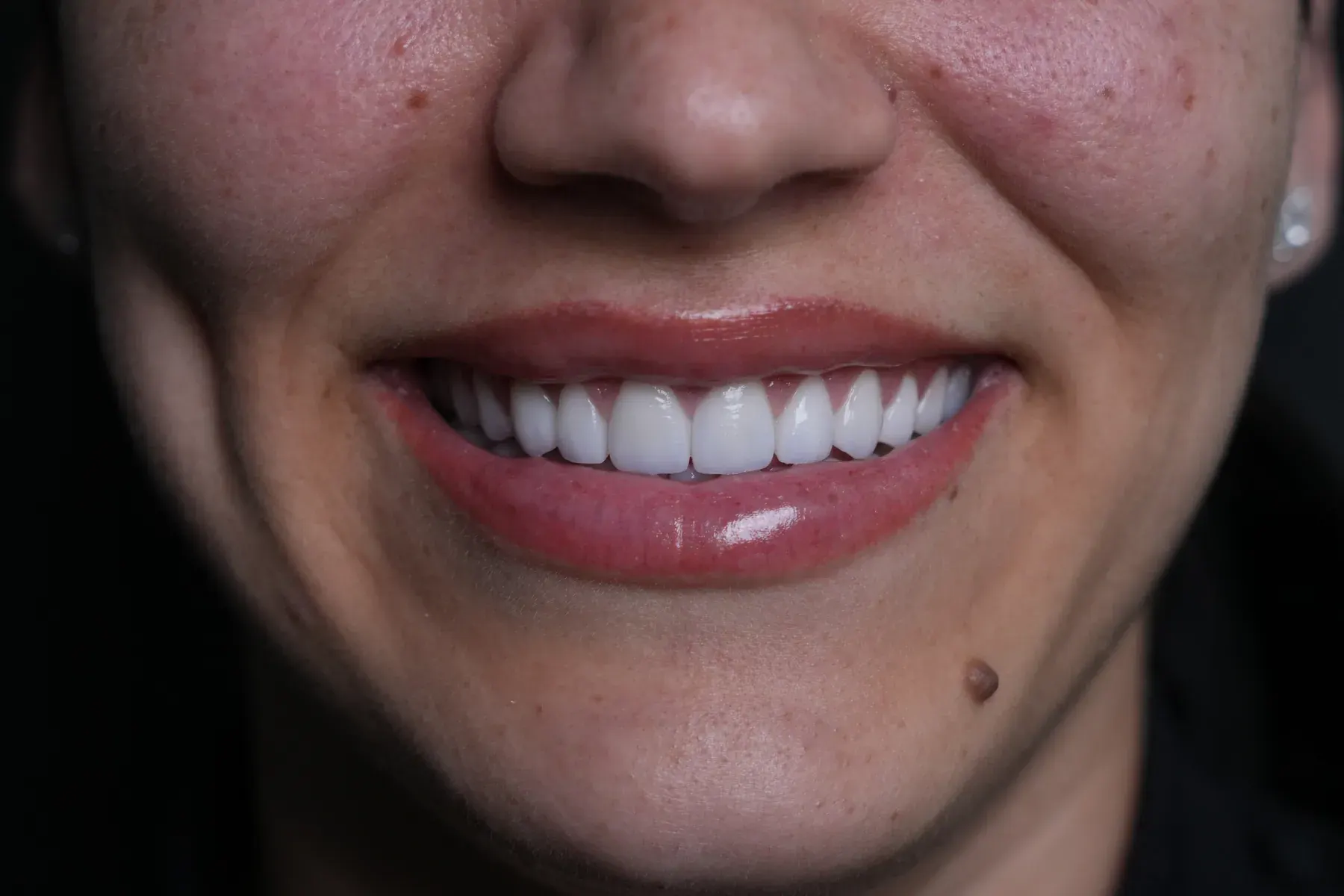
Teeth whitening is the most popular cosmetic dental procedure in the United States. It's also one of the most misunderstood. From drugstore strips that promise dramatic results to viral charcoal trends that actually harm enamel, the gap between marketing and reality is wide. Here's the honest breakdown of what works, what doesn't, and what your real options are.
How tooth whitening actually works
All effective whitening products use one of two active ingredients: hydrogen peroxide or carbamide peroxide. These break down into water and oxygen, and the oxygen penetrates the enamel to break apart the stain molecules that have accumulated within the tooth. That's it. Everything else — the gel format, the lights, the trays — is delivery mechanism for the active ingredient.
Important: peroxide whitening works on natural enamel only. It does nothing to porcelain veneers, crowns, fillings or bonding. If you have any cosmetic dental work, those will stay the color they are, and the surrounding natural teeth will shift around them. This is why we always whiten natural teeth before placing veneers or crowns — so the color match holds long-term.
What causes teeth to darken
Two categories of stains affect tooth color:
Extrinsic stains (on the surface)
Caused by what you consume. The biggest culprits:
- Coffee and black tea
- Red wine
- Tobacco (smoking and chewing)
- Cola and dark sodas
- Berries
- Soy sauce, balsamic vinegar, curry
These respond best to whitening because they sit on the enamel surface.
Intrinsic stains (within the tooth)
Caused by changes inside the tooth structure. Common causes:
- Aging — enamel thins over time and the yellower dentin underneath becomes more visible
- Tetracycline antibiotics taken during childhood tooth development (causes gray/brown bands)
- Excessive fluoride during tooth development (causes white spots)
- Trauma to a tooth (often turns it gray over years)
- Root canal treatment (can darken the treated tooth)
Intrinsic stains are harder to lift and may require more intensive treatment or alternative cosmetic solutions like veneers.
Your real options, ranked by effectiveness
1. In-office professional whitening (most effective)
Performed at Art Dental Studio, this uses concentrated hydrogen peroxide (typically 25-40%) applied directly to the teeth in a controlled environment. A barrier protects your gums; some systems use light activation to speed up the reaction.
- Time: 60-90 minutes per session
- Results: Visible immediately. Most patients see several shades whiter after one session.
- Lifespan: 1-3 years depending on diet and habits
Best for: Patients who want fast, dramatic results for an event, or as a starting point before veneers.
2. Custom take-home trays (most cost-effective long-term)
We take impressions of your teeth and create custom-fitted trays. You apply prescription-strength gel (typically 15-22% carbamide peroxide) at home, usually overnight or for 30-60 minutes daily, for 1-2 weeks.
- Time: 1-2 weeks of daily application
- Results: Gradual but excellent, typically several shades whiter
- Lifespan: 1-3 years; you can touch up periodically with the same trays
Best for: Most patients. The trays last for years and gel refills are inexpensive — so you can maintain results indefinitely.
3. Over-the-counter whitening strips
Brands like Crest Whitestrips use lower-concentration hydrogen peroxide (5-14%) on thin adhesive strips. They work, but produce more modest results than professional options.
- Time: 2-4 weeks of daily application
- Results: a modest improvement typically
- Lifespan: 6-12 months
Best for: Patients who want a modest improvement and don't want to invest in professional treatment.
4. Whitening toothpastes
Marginally effective. Most whitening toothpastes work primarily through abrasive polishing (which removes surface stains) rather than peroxide penetration. They don't lighten the underlying tooth color.
- Results: Slight reduction in surface stains; no deep whitening
- Risk: Overuse of abrasive pastes can wear enamel
Best for: Maintenance after professional whitening, not for actual color change.
5. Charcoal and DIY methods (don't do this)
Activated charcoal toothpaste, baking soda, lemon juice, hydrogen peroxide rinses, oil pulling — none of these meaningfully whiten teeth. Worse, the abrasive ones (charcoal, baking soda used regularly) wear down enamel permanently. Lemon juice and other acids actually accelerate yellowing by dissolving enamel.
The truth: if a method makes teeth temporarily look whiter, it usually does so by damaging enamel — making them more likely to stain in the future.
What whitening can't fix
Whitening lifts stains but cannot:
- Change the shape, size or alignment of teeth
- Hide chips, cracks or gaps
- Lighten veneers, crowns or fillings
- Correct internal discoloration from root canal treatment, severe trauma or tetracycline staining
- Whiten teeth beyond their natural maximum brightness
For these issues, the right solution is usually porcelain veneers or bonding — which can change both color and shape simultaneously. If you're considering veneers, whitening any remaining natural teeth before placement ensures long-term color match.
Sensitivity and side effects
The most common side effect of whitening is temporary tooth sensitivity — sharp, brief reactions to cold drinks or air. This is normal and typically resolves within a few days after stopping treatment. Patients with already-sensitive teeth should:
- Use a desensitizing toothpaste (Sensodyne) for 2 weeks before starting
- Lower the concentration or shorten daily application times
- Skip a day if sensitivity flares
- Talk to us about prescription-strength fluoride rinses
Gum irritation can also occur if peroxide contacts the gum tissue. Custom-fitted trays prevent this; one-size-fits-all OTC products are more likely to cause issues.
Permanent damage from properly-supervised whitening is rare. The peroxide does not weaken tooth structure when used at recommended concentrations and durations.
How long does whitening last?
Realistically, professional whitening results last 1-3 years before noticeable rebound. Factors that shorten the lifespan:
- Heavy coffee, tea or red wine consumption
- Smoking or vaping
- Skipping 6-month cleanings
- Not maintaining with periodic touch-up gel
Patients with custom trays at Art Dental Studio typically do a 2-3 day touch-up every 6-12 months — this maintains the original brightness indefinitely with minimal cost (gel refills are inexpensive).
Common questions
Is professional whitening worth it over OTC strips? Yes for most patients. The cost difference isn't large when amortized over the lifespan of the results, and the depth of whitening is significantly better. Custom take-home trays are also reusable indefinitely with cheap gel refills.
Can pregnant women whiten their teeth? We recommend postponing all elective whitening during pregnancy and breastfeeding as a precaution. There's no documented harm to fetus or baby, but safety hasn't been studied extensively.
Will whitening damage existing fillings? No, but it won't lighten them either. Fillings stay the same color while surrounding teeth get lighter. If you have visible front-tooth fillings, they may need to be replaced after whitening to match.
How white is too white? Aesthetically, ultra-bright "Hollywood" white can look unnatural — like a beam-them-off-the-set kind of bright. We typically recommend matching teeth to the whites of your eyes for the most natural look. This is something we discuss during a consultation.
Can I whiten if I have braces or Invisalign? With Invisalign — yes, you can use the aligners as whitening trays at home. With traditional braces — wait until the braces come off, otherwise the brackets cover areas that won't whiten and you'll have a patchwork effect.
The bottom line
Professional teeth whitening works and is safe when supervised by a dentist. Skip the viral trends. If you want significant, lasting results, the right combination at Art Dental Studio is typically: an in-office whitening session for the initial brightness boost, followed by custom take-home trays for maintenance touch-ups every 6-12 months. Most patients are surprised how dramatic the change is — and how reasonable the long-term cost.
Frequently asked questions
Does whitening work on veneers, crowns or fillings?
No. Peroxide whitening works on natural enamel only — it does nothing to porcelain veneers, crowns, fillings or bonding. This is why natural teeth are whitened before placing cosmetic work.
Do charcoal or DIY methods whiten teeth?
No. Charcoal, baking soda and acidic home remedies don't meaningfully whiten and can wear down enamel. Only hydrogen peroxide and carbamide peroxide are clinically proven.
Can I whiten with Invisalign or braces?
With Invisalign you can use the aligners as whitening trays at home. With traditional braces, it's best to wait until they come off to avoid uneven results.