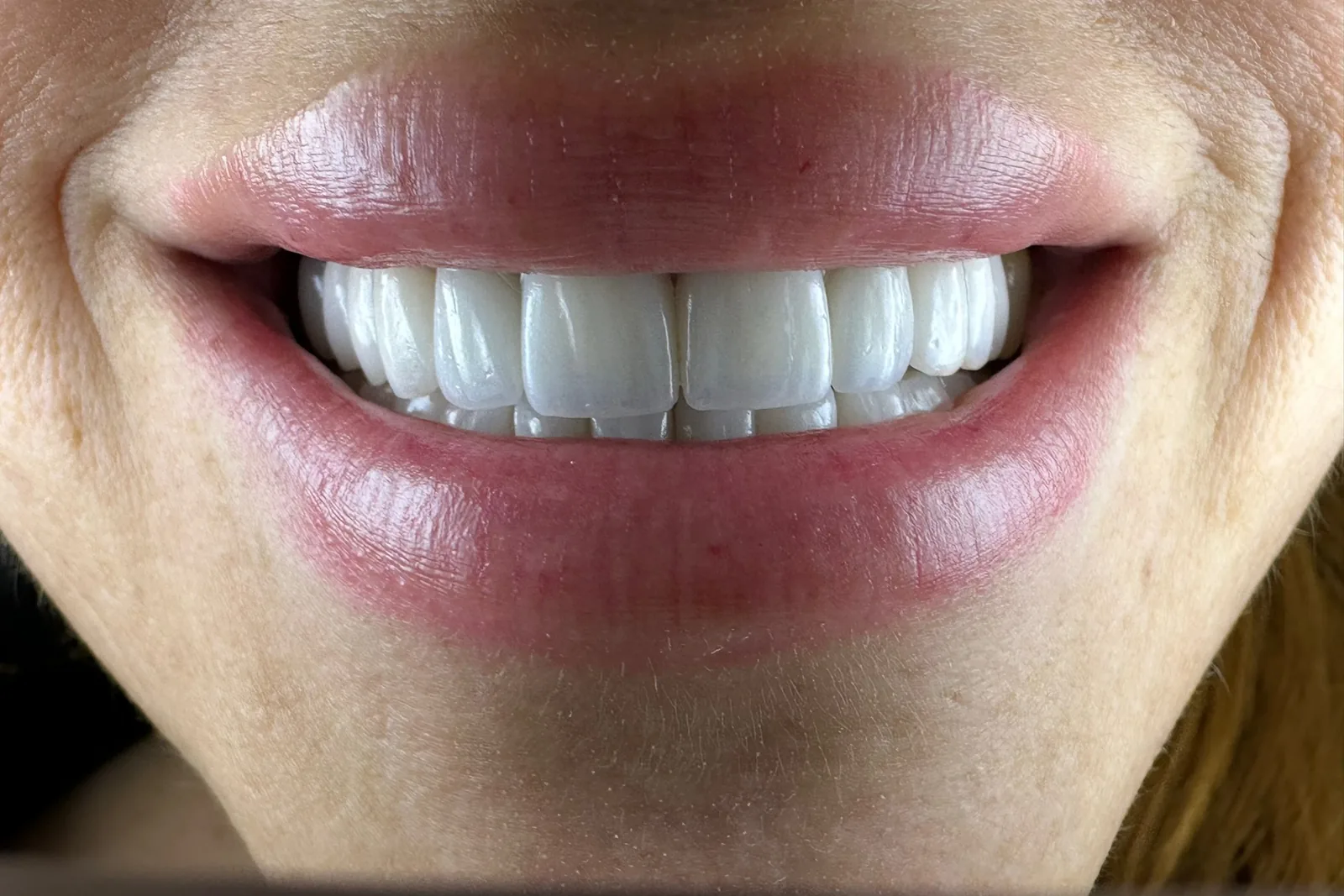
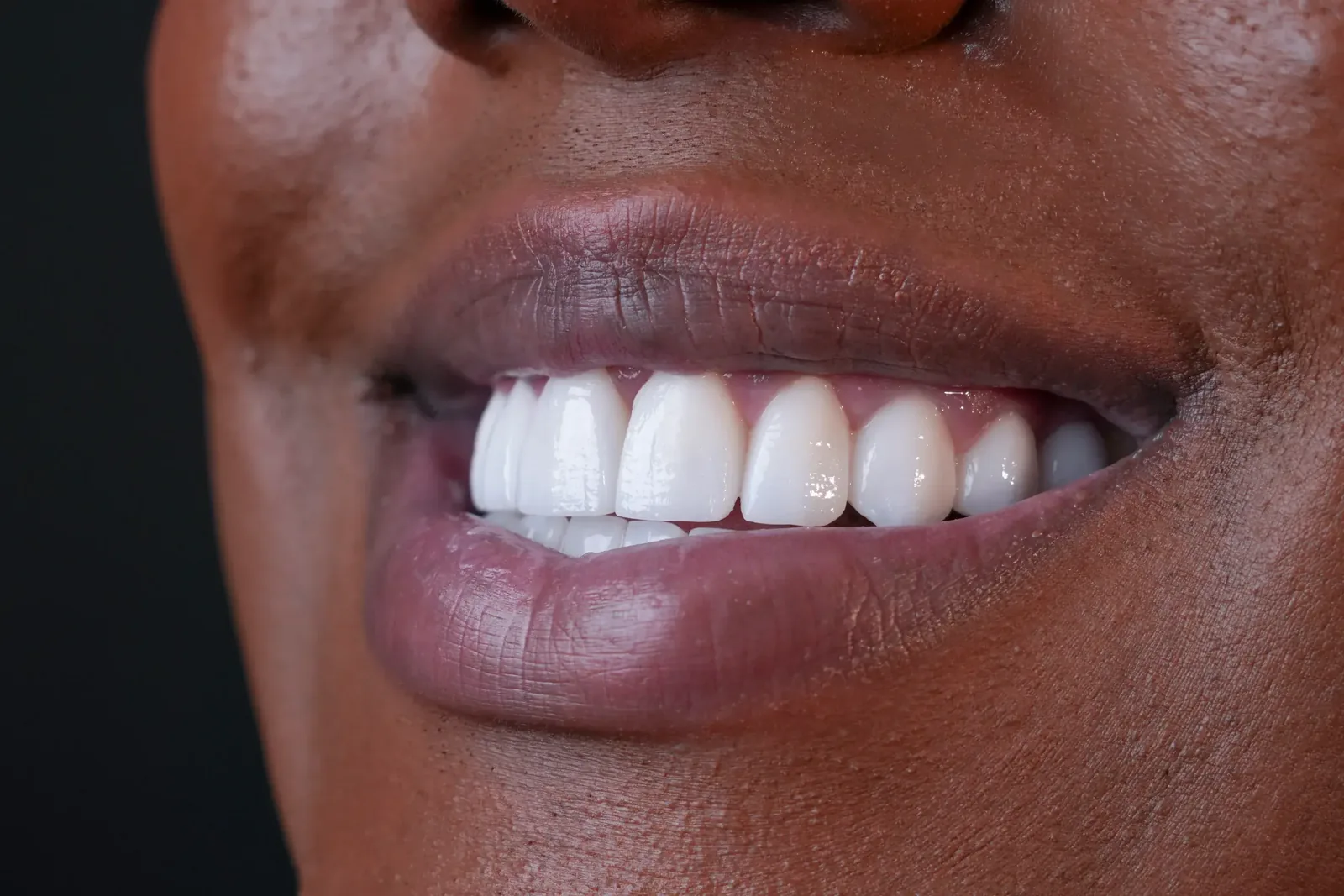
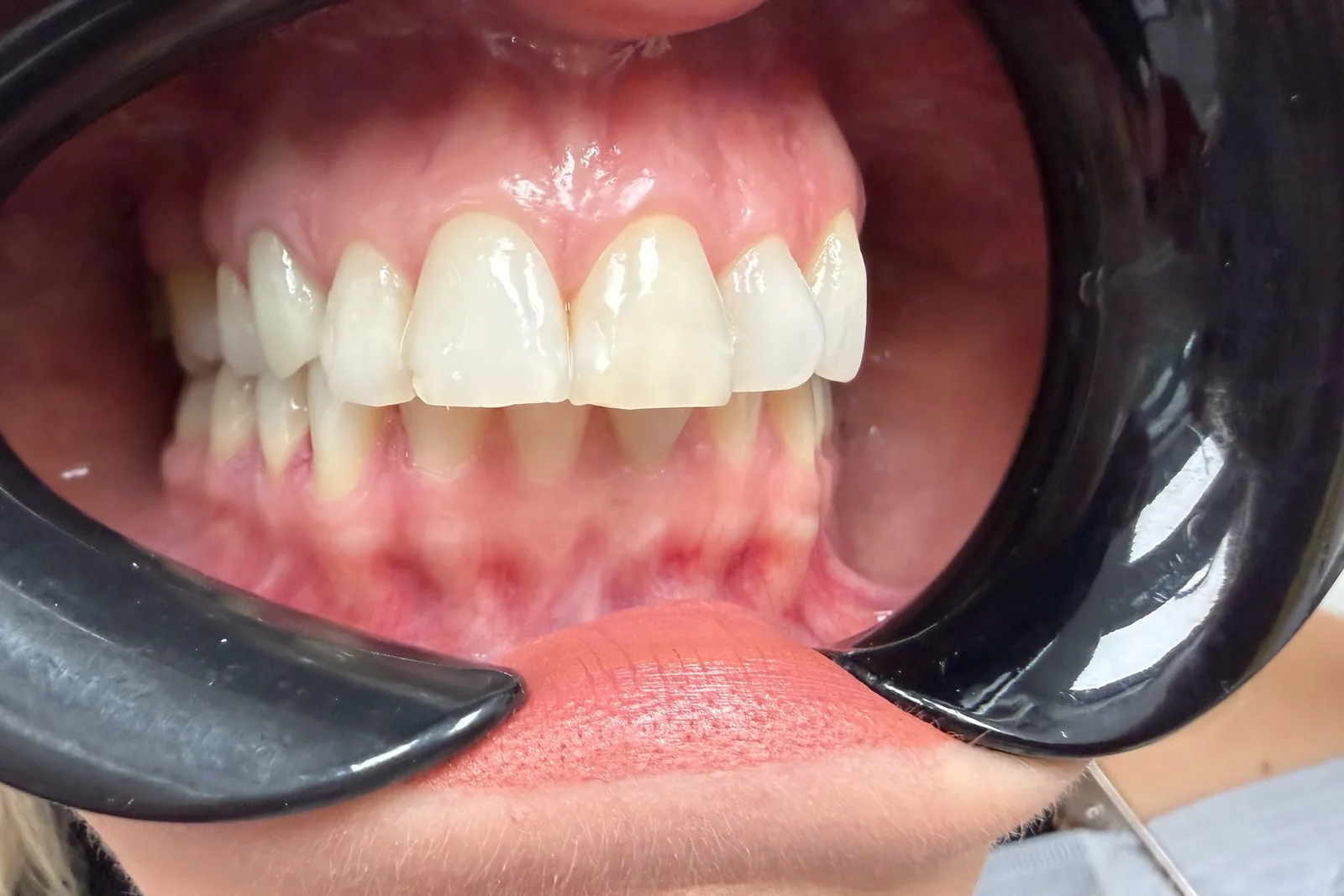
A smile makeover changes how your teeth look: color, shape, size and alignment. A full mouth rehabilitation rebuilds how your mouth works: the bite, the gums, missing or failing teeth, and then the appearance. If your teeth are healthy and you want them to look different, it is usually a makeover. If they hurt, wear down or keep breaking, it is usually rehabilitation.
The main difference: function first or appearance first
Both treatments can end with a nicer smile, so the names get mixed up. The real difference is where the plan starts.
A smile makeover starts from the mirror. The teeth are basically healthy, the bite works, and the goal is to change what people see. Whitening, bonding, veneers and sometimes orthodontics are the usual tools.
A full mouth rehabilitation (also called full mouth reconstruction) starts from health and function. Something in the mouth isn't working: teeth are worn flat, the bite has collapsed, several restorations are failing, teeth are missing or the gums are sick. The appearance gets fixed too, but only after the foundation is stable. You can see how this is approached on our full mouth reconstruction page.
| Smile makeover | Full mouth rehabilitation | |
|---|---|---|
| Main goal | Change how the smile looks | Restore health, bite and function, then appearance |
| Typical starting point | Healthy teeth and gums, stable bite | Wear, pain, failing restorations, missing teeth or gum disease |
| Common treatments | Whitening, bonding, veneers, orthodontics | Gum treatment, root canals, crowns, implants, bite correction, then cosmetic work |
| Does the bite change? | Usually not | Often yes, on purpose |
| Who is usually involved | General or cosmetic dentist, ceramist | General dentist plus specialists as needed, ceramist |
| How it unfolds | Fewer phases | Several phases, in a set order |
Signs that point to a rehabilitation
These are common reasons a dentist talks about rehabilitation rather than a cosmetic plan:
- Worn or short teeth, often from grinding, so the bite has lost height
- A bite that has shifted, with teeth that no longer meet the way they used to, or jaw discomfort
- Many old fillings and crowns failing at the same time, with new chips or decay around the edges
- Missing teeth, especially in the back, which pushes chewing onto the front teeth
- Gum disease: bleeding, receding gums or teeth that feel loose
One of these alone doesn't mean you need your whole mouth redone. Several together usually mean a cosmetic plan alone won't hold. Your dentist confirms it after an exam, X-rays and a look at how your teeth meet.
How a rehabilitation plan is sequenced
Rehabilitation is done in an order, and the order is what makes it last. A common sequence:
- Stabilize. Treat pain, infection and active gum disease. Teeth that can't be saved are removed; teeth that can are treated, sometimes with a root canal.
- Rebuild. Replace what is missing and restore what is broken, with crowns, onlays or dental implants. If the bite needs to change, temporary restorations often come first, so you can test the new bite before anything is final.
- Refine. Once the mouth is healthy and the bite is comfortable, the cosmetic work: shape, color and proportions.
- Protect. A night guard if you grind, regular cleanings and checkups, so the new work isn't exposed to the same forces that wore down the old teeth.
Skipping step 1 to get to step 3 is how veneers end up on teeth with untreated gum disease or a bite that will break them. If you are leaning toward a cosmetic result, our article on biomimetic dentistry and smile design explains how to keep as much natural tooth as possible along the way.

Why specialists need to coordinate
A rehabilitation touches several areas of dentistry at once. Gums, root canals, tooth movement, surgery and porcelain each have their own expert, and the timing between them matters. Gums need to be healthy before crowns are made. Teeth sometimes need to move before they're restored. An extraction has to heal before an implant.
At Art Dental Studio, these specialists work in the same clinic:
- Periodontist, Dr. Cohen, for gum health
- Endodontist, Dr. Ogando, for root canals
- Orthodontist, Dr. Yilian, when teeth need to move first
- Oral and maxillofacial surgeon, Dr. Ricardo Romero, when surgery is part of the plan
The porcelain restorations are hand-crafted by master ceramist Enrique in the clinic's own lab, and the clinic is directed by Dr. Vivian Menendez. When everyone works under one roof, the plan doesn't stall between offices. You can read more on our multi-specialty dentist page.
Every plan is built around one person
There is no standard full mouth package. Two people with worn teeth can need very different plans depending on their gums, bite, health history, how they grind and what they want their smile to look like. Some plans are mostly restorative with a light cosmetic finish; others reverse that.
A personalized plan should tell you what each phase includes, why it comes in that order, what the alternatives are, and what happens if you stop after a given phase.

Questions to ask at your visit
- Is my problem mainly cosmetic, or is something in my bite or gums not working?
- Does my bite need to change, and how would we test it first?
- Which specialists would be involved, and in what order?
- What does each phase include, and can it be done in stages?
- How will we protect the new work once it is done?
Where to be seen in South Florida
Art Dental Studio has three locations, with care in English and Spanish:
Miami / Hialeah (305) 922-2262 · Kendall (305) 395-3330 · Cooper City (954) 233-0707
If you have swelling of the face or neck, a high fever, or trouble swallowing or breathing, go to the emergency room or call 911.
The bottom line
If your teeth are healthy and you want them to look different, you're likely looking at a smile makeover. If they're worn, breaking, missing or sitting on sick gums, a full mouth rehabilitation comes first, in a set order: stabilize, rebuild, refine, protect. An exam with X-rays and a bite check is how your dentist tells the two apart.
Art Dental Studio has three South Florida locations — Miami / Hialeah, Kendall and Cooper City — with care in English and Spanish. General dentistry, orthodontics, endodontics and periodontics work under one roof, in a clinic directed by Dr. Vivian Menendez.
Frequently asked questions
What is the difference between a smile makeover and full mouth rehabilitation?
A smile makeover mainly changes appearance on teeth that are already healthy. A full mouth rehabilitation restores health and function first, such as the bite, gums and missing or failing teeth, and then the appearance. Your dentist tells them apart with an exam, X-rays and a bite check.
What are signs I need full mouth rehabilitation?
Common signs include worn or short teeth, a bite that has shifted, many old fillings or crowns failing at once, missing back teeth and gum disease. One sign alone does not mean the whole mouth needs work, but several together usually do.
In what order is a full mouth rehabilitation done?
A typical sequence is stabilize, rebuild, refine and protect. Pain, infection and gum disease are treated first, then missing and broken teeth are restored, then the cosmetic details, and finally the new work is protected with checkups and, if needed, a night guard.