Biomimetic dentistry is a way of repairing teeth that copies how a natural tooth is built and keeps as much healthy tooth as possible. Instead of starting with a crown, the dentist looks for the smallest restoration that solves the problem, and chooses materials that look and behave like enamel and dentin.
What "biomimetic" means in a dental office
The word comes from "mimic life." A healthy tooth has two main layers. Enamel on the outside is hard and partly translucent, so light passes into it before bouncing back. Dentin underneath is softer, a little more flexible and warmer in color, and it gives the tooth most of its shade. Together they let the tooth take chewing forces, flex very slightly and spread the load.
A biomimetic approach tries to rebuild that system rather than cover it. In practice, it means:
- removing decay and weak tooth, but not healthy tooth just to make room for a restoration
- bonding the new material to what is left, so tooth and restoration work as one piece
- choosing layered materials that let light pass through the way enamel does
It is a philosophy of treatment. It is not a brand, a single product or a machine. Two dentists can both call their work biomimetic and still make different choices in the same mouth, which is why the conversation at your exam matters more than the label.
Is biomimetic dentistry legitimate, and is it worth it?
It's a fair question, because the word sounds like marketing. The idea comes out of research on adhesive dentistry: how well a restoration bonded to the tooth can bring back the strength and behavior of the original. One example is a 1999 laboratory study by Pascal Magne and William Douglas at the University of Minnesota, which tested porcelain veneers bonded to teeth and concluded that, under the conditions tested, they restored the mechanical behavior of the intact tooth.
So it is a real, research-based way of thinking, not a gimmick. It is also not a separate dental specialty, and the label alone tells you little. Whether it is worth it for you depends on your teeth. The practical value is simple: tooth that stays in your mouth doesn't have to be replaced later.
The "smallest restoration that works" ladder
Most conservative dentists think about repairs as a ladder. You start at the lowest step that solves the problem and only climb when the tooth needs it.
- Bonding. Tooth-colored composite is shaped directly on the tooth to fix a chip, a small gap or a worn edge. Usually little or no tooth is removed. See how composite bonding is done.
- Onlay or partial restoration. When a back tooth has lost a cusp or has a large old filling, a partial restoration can cover only the damaged part and leave the healthy walls in place. This is what people usually mean by a "biomimetic onlay": a piece made to fit the missing part and bonded to the rest of the tooth.
- Veneer with minimal preparation. For the front teeth, a thin shell of porcelain covers the visible surface. The preparation can be very light, and in some cases none is needed.
- Crown, only when it is needed. A crown covers the whole tooth and requires shaping it on every side. It is still the right answer for a tooth that is badly broken or too weak to hold a smaller repair.
If you are weighing the first and third steps for a cosmetic change, our comparison of veneers vs. bonding goes into the trade-offs.

What biomimetic thinking changes in a smile design
A smile design can easily become "veneers on every tooth you see." A conservative plan asks a different first question: what does each tooth actually need?
That can lead to a mixed plan. One tooth gets bonding for a small chip, two get veneers because their shape or color can't be fixed another way, and a few are simply whitened or left alone. Sometimes moving the teeth first with orthodontics means less porcelain later, because the teeth no longer need to be built out to look straight.
Art Dental Studio follows a biomimetic, tooth-preserving approach: every plan starts by looking at how much natural tooth can be saved. The orthodontist, Dr. Yilian, works in the same clinic, so the option of aligning teeth before any restoration can be discussed at the start instead of after the fact.
Biomimetic veneers: what makes porcelain look like enamel
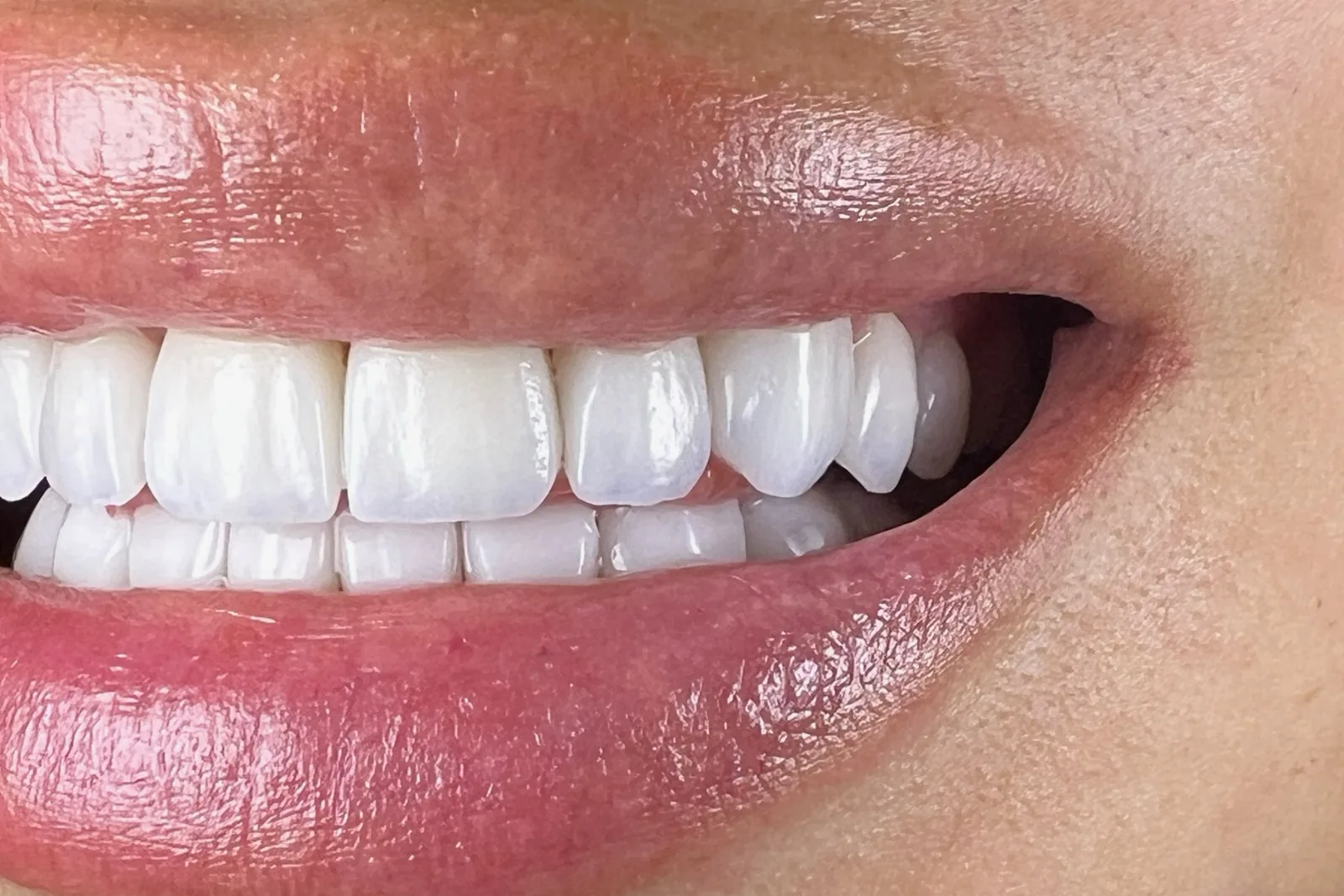
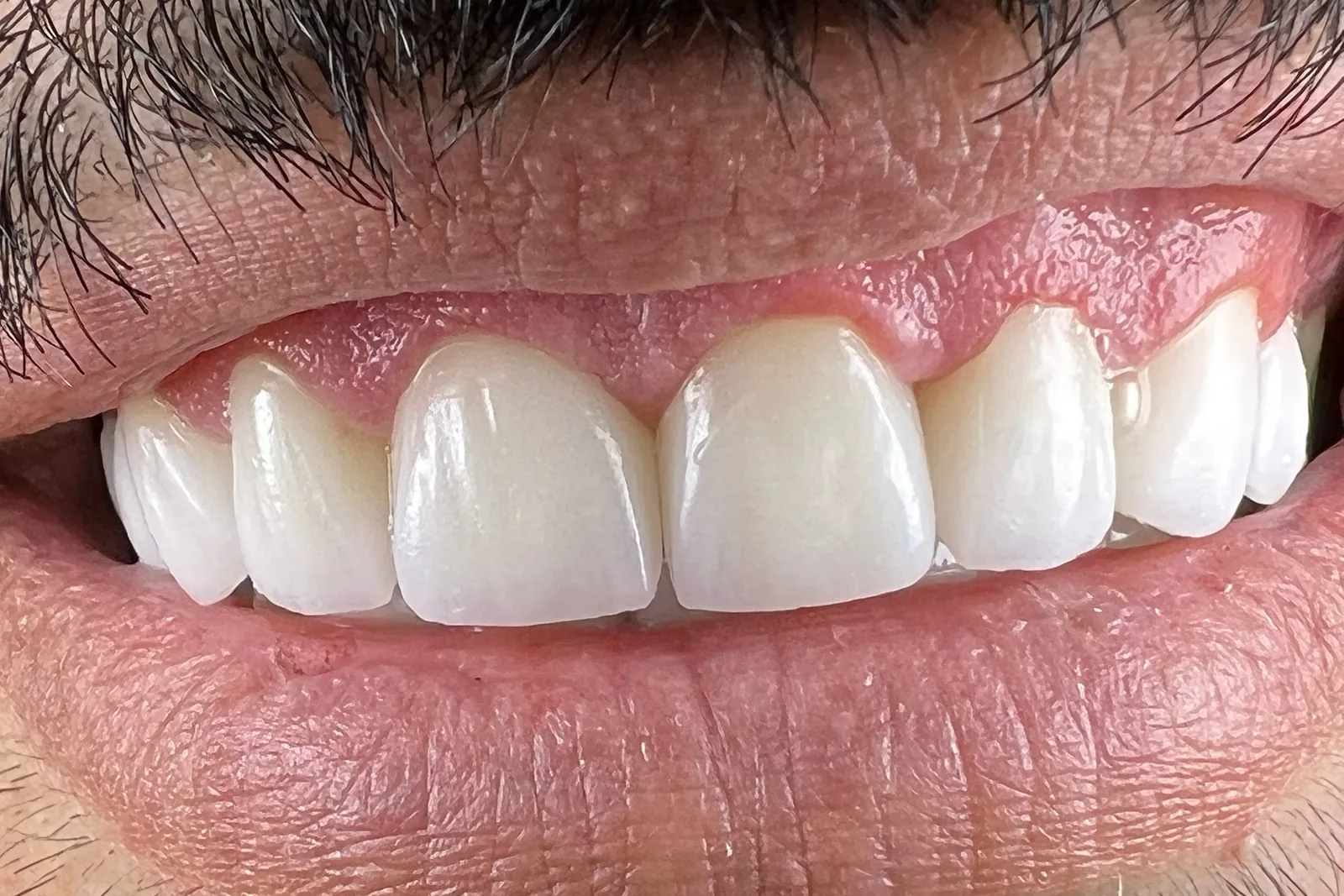
A flat, single-shade veneer reflects light like a piece of tile. Natural enamel doesn't. It is more translucent at the biting edge, warmer near the gum, and its surface has fine texture that catches light.
Layered porcelain copies that. The ceramist builds the veneer in thin layers, each with its own opacity and tint, so light enters, scatters and comes back the way it does in a real tooth. That is the practical meaning of a "biomimetic veneer": a thin restoration that imitates the structure of enamel instead of hiding the tooth behind a uniform white surface.
At Art Dental Studio, master ceramist Enrique hand-crafts porcelain veneers and restorations in the clinic's own in-house dental lab. You can read more about what a master ceramist does and why it shows in the final result.
The limits: when minimal prep isn't possible
Conservative doesn't mean "never a crown." Some situations call for more coverage:
- a tooth with a large fracture or several old fillings that leave thin walls
- a tooth that has had a root canal and needs protection, which your dentist evaluates case by case
- teeth that sit far back or are rotated, where a thin veneer can't make them look aligned
- heavy grinding or a bite that puts strong forces on the front teeth
In those cases, a crown or a fuller restoration may be the option that lasts. A good plan explains why a bigger step was chosen. Your dentist confirms what fits your teeth after an exam and X-rays.

Questions to ask at your visit
- Which of my teeth actually need treatment, and which can be left alone?
- For each tooth, is there a smaller option, and why wasn't it chosen?
- How much tooth will be removed for a veneer or crown?
- Would orthodontics first reduce how much needs to be done?
- Who makes the veneers, and are they layered porcelain?
Where to be seen in South Florida
Art Dental Studio has three locations, with care in English and Spanish:
Miami / Hialeah (305) 922-2262 · Kendall (305) 395-3330 · Cooper City (954) 233-0707
If your smile needs more than cosmetic work, such as worn teeth or a bite that has changed over time, our guide on full mouth rehabilitation or a smile makeover explains how to tell which one you need.
The bottom line
Biomimetic dentistry starts from the tooth you already have. Bonding before a veneer, a veneer before a crown, and a crown when the tooth truly needs it. For a smile design, that usually means fewer teeth touched and porcelain layered to behave like enamel. Ask your dentist to walk you through the ladder for each tooth, and to explain every step up.
Art Dental Studio has three South Florida locations — Miami / Hialeah, Kendall and Cooper City — with care in English and Spanish. General dentistry, orthodontics, endodontics and periodontics work under one roof, in a clinic directed by Dr. Vivian Menendez.
Frequently asked questions
What is biomimetic dentistry?
Biomimetic dentistry is an approach to repairing teeth that imitates the natural tooth and keeps as much healthy structure as possible. The dentist chooses the smallest restoration that solves the problem and bonds materials that behave like enamel and dentin. It is a treatment philosophy, not a brand or a single product.
Is biomimetic dentistry legitimate?
Yes. It grows out of research on adhesive dentistry, which studies how bonded restorations can restore the behavior of the original tooth. It is not a separate dental specialty, so the label alone says little; ask your dentist to explain the options for each tooth.
Can every tooth be treated with minimal preparation?
No. Teeth with large fractures, thin walls from old fillings, or strong grinding forces may need a crown or a fuller restoration. Your dentist decides after an exam and X-rays, and should explain why a bigger option was chosen.