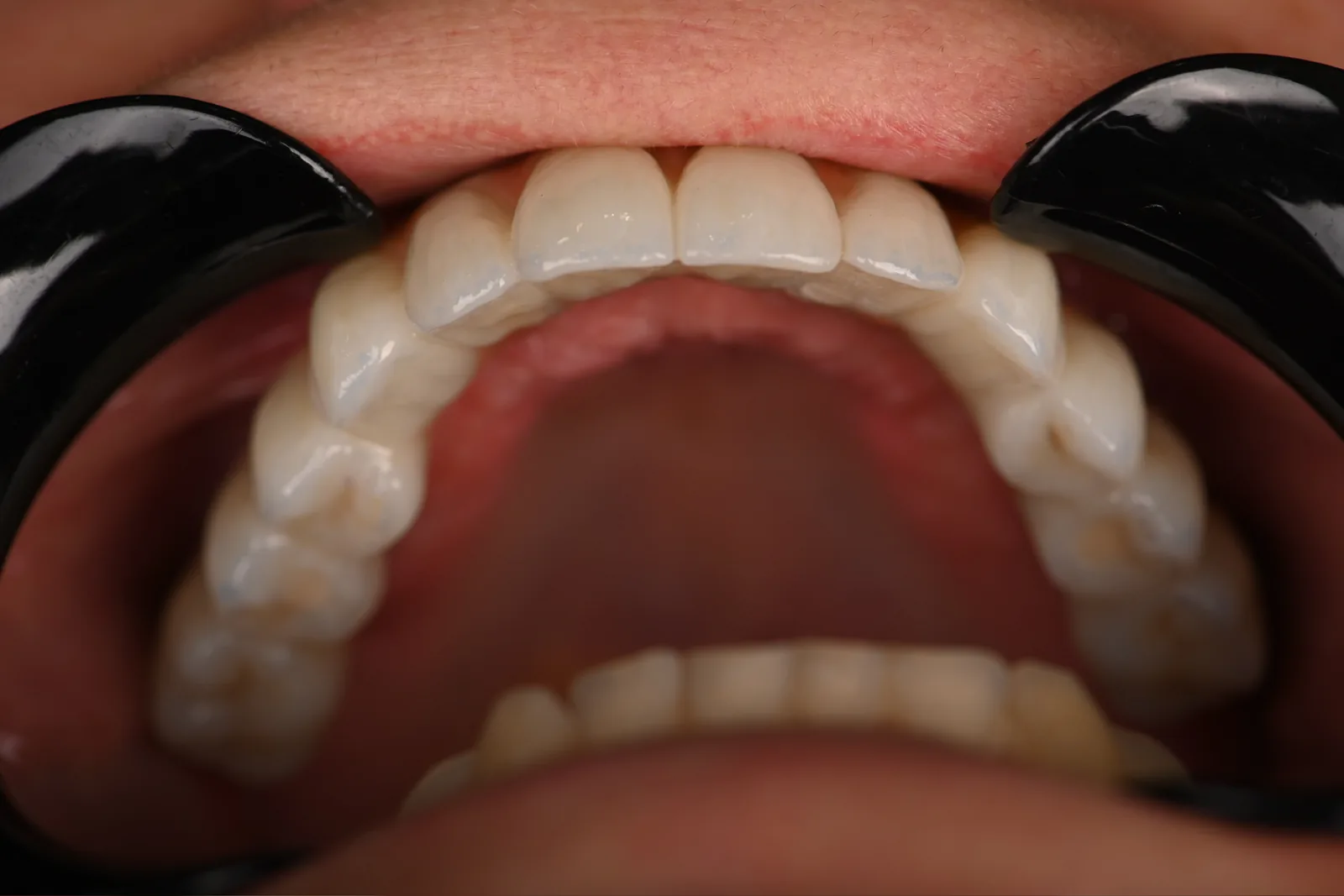
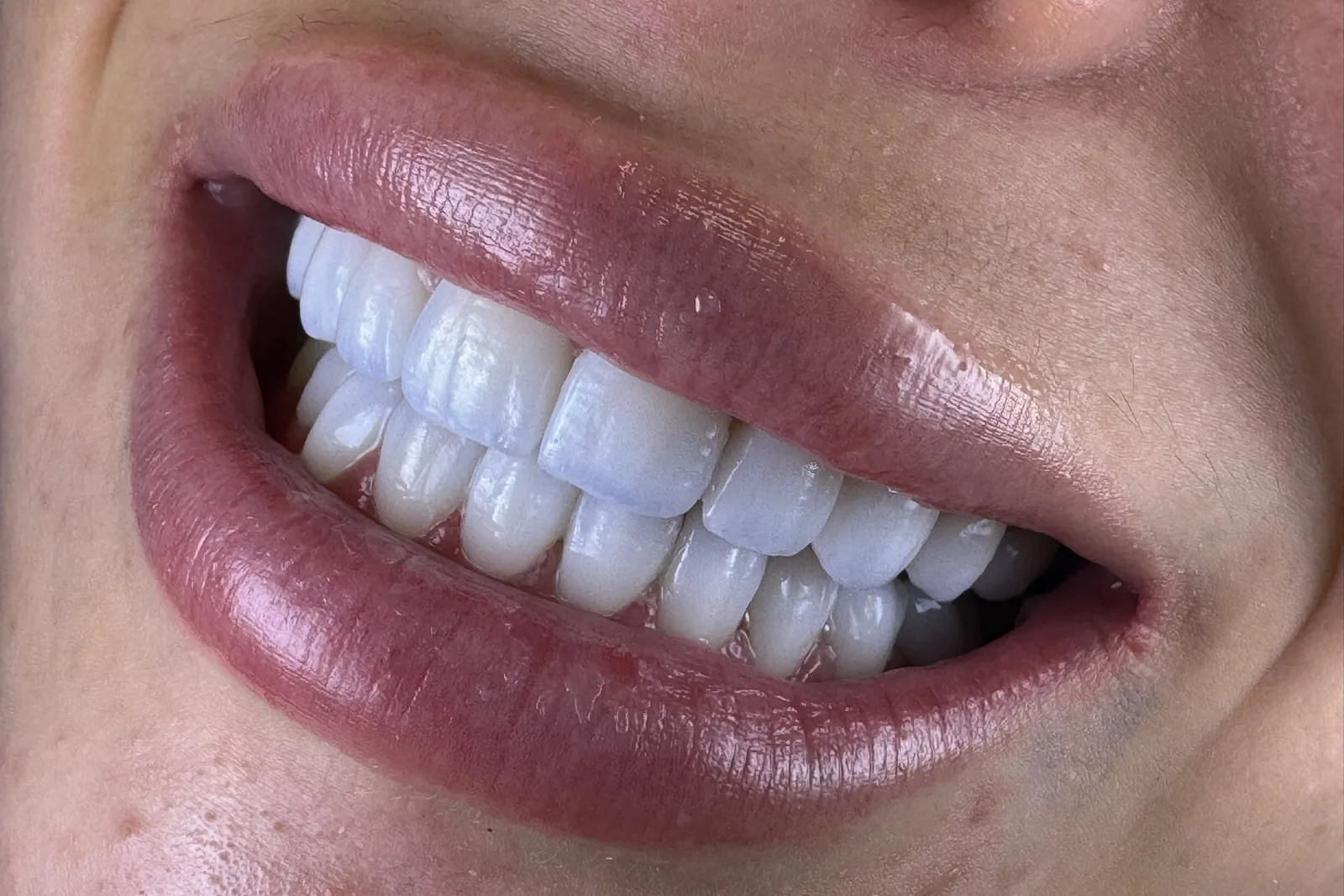
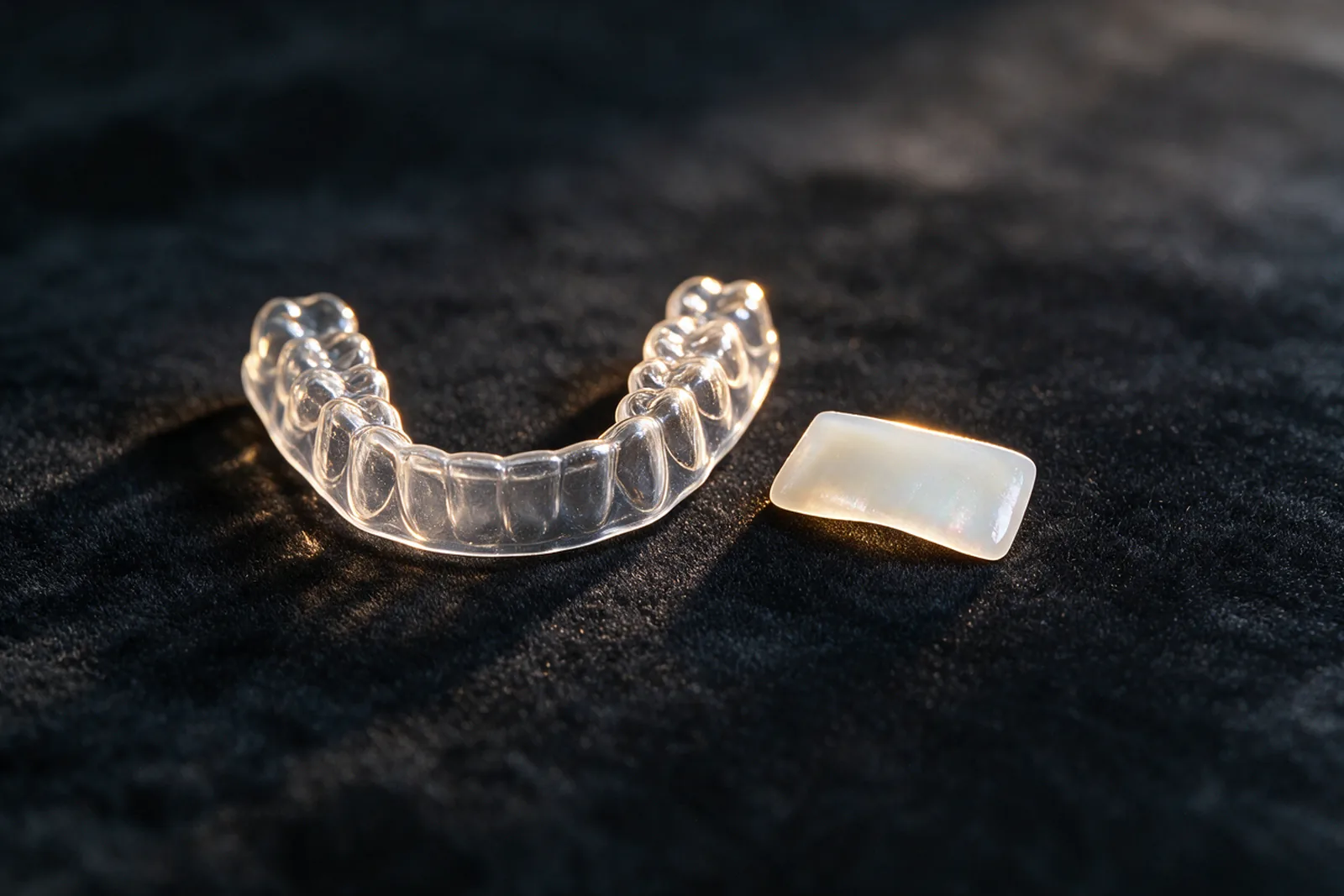
Dental bonding is a cosmetic repair in which your dentist applies a tooth-colored composite resin directly to a tooth, shapes it by hand, hardens it with a curing light and polishes it to match. It is used for chips, small gaps and uneven edges, is usually done in one visit, and often needs little or no removal of healthy tooth.
What is composite bonding made of?
Composite resin is a tooth-colored dental material: a plastic base reinforced with very fine glass-like particles. It arrives as a soft paste. Your dentist picks a shade close to your natural teeth, layers the paste onto the tooth and sculpts it into shape before hardening it.
Nothing is made in a lab. Everything happens in the chair, on your own tooth, which is why bonding is often called "direct" bonding.
What can bonding fix?
Bonding works best for small, local problems on one or a few teeth:
- A chipped corner or edge on a front tooth
- A small gap between two front teeth
- A tooth that is slightly shorter or narrower than its neighbor
- Small notches near the gumline
- Some spots of discoloration on a single tooth
Cleveland Clinic's overview of dental bonding lists the same uses: concealing chips or minor cracks, closing gaps and hiding discoloration.
It is a poor fit for large breaks, teeth that have lost a lot of structure, or a full change of color and shape across the smile. Those cases usually call for other treatments, and your dentist will tell you which.
What happens in the chair
For most people, a bonding visit feels like a long cleaning with more polishing at the end. Here is what usually happens:
- Your dentist checks the tooth and matches the resin shade to your teeth. Bonding is matched to the color you have now, so if you plan to whiten, that usually comes first.
- The surface of the tooth is lightly roughened and a conditioning liquid is applied so the resin can grip it.
- The resin goes on in layers. Your dentist shapes each one, then hardens it with a blue curing light for a few moments.
- The final shape is trimmed, checked against your bite and polished until it reflects light like the teeth beside it.
Cleveland Clinic describes the procedure as painless and done in one office visit. Many bonding repairs need no numbing at all, because the work stays on the outer surface of the tooth. If the chip is deep or close to the nerve, your dentist may use local anesthesia; that decision is made case by case.
You can usually eat and go back to work the same day. The tooth may feel slightly different to your tongue for a day or two while you get used to the new edge.

How long does dental bonding last?
It depends on where the bonding is, how big it is and what you ask of it. Cleveland Clinic states that the material typically lasts between three and 10 years before it needs a touch-up or replacement, and that it can chip over time.
What shortens its life:
- Biting nails, pens or ice
- Opening packages with your teeth
- Grinding or clenching, especially at night
- Frequent coffee, tea, red wine or tobacco, which gradually stain the resin
The good news is that bonding is easy to repair. A small chip or a dull surface can often be fixed by adding resin or polishing again, without starting over. Your dentist checks the bonded areas at your regular visits.
Bonding or veneers?
People often weigh bonding against porcelain veneers. They solve different problems, and our full comparison of veneers vs bonding goes deeper. In short:
| Composite bonding | Porcelain veneers | |
|---|---|---|
| Where it is made | On your tooth, by your dentist | In a lab, from a design |
| Visits | Usually one | Several |
| Best for | One or a few teeth, small repairs | Several teeth, a full change of color and shape |
| Staining | Picks up stains more easily; can be polished | Glazed surface that keeps its color well |
| Repairs | Easy to touch up | Usually replaced if damaged |
If one chipped tooth is the only thing that bothers you, composite bonding is often the simpler answer. If you are unhappy with the color or shape of most of your front teeth, porcelain veneers may be worth discussing instead.
When bonding may not be enough
A chip that looks small can hide a crack underneath. See your dentist rather than guessing if:
- The tooth hurts when you bite or release
- It is sensitive to cold or heat for more than a moment
- A large piece broke off, or an old filling came out with it
A tooth that has lost a lot of structure may need a dental crown to protect it. Your dentist confirms which option fits after examining the tooth and, when needed, taking an X-ray.

Questions to ask at your visit
- Is bonding a good fit for this tooth, or is the damage too large?
- Should I whiten before you match the shade?
- Do I need numbing for this repair?
- Do I grind my teeth, and would a night guard protect the bonding?
- What should I do if a corner chips again?
Where to be seen in South Florida
Art Dental Studio repairs chipped and uneven teeth at three locations, with care in English and Spanish:
Miami / Hialeah (305) 922-2262 · Kendall (305) 395-3330 · Cooper City (954) 233-0707
If a tooth broke and hurts, call the same day; dental emergency appointments are offered the same day whenever possible. If you have swelling of the face or neck, a high fever, or trouble swallowing or breathing, go to the emergency room or call 911.
The bottom line
Dental bonding is a tooth-colored resin your dentist shapes directly on the tooth to repair chips, close small gaps and even out edges, usually in one visit. It removes little or no healthy tooth and is easy to touch up, but it stains and chips more easily than porcelain. For one or two teeth with small flaws, it is often the first option worth asking about. Your dentist confirms whether it fits your case.
Art Dental Studio has three South Florida locations — Miami / Hialeah, Kendall and Cooper City — with care in English and Spanish. General dentistry, orthodontics, endodontics and periodontics work under one roof, in a clinic directed by Dr. Vivian Menendez.
Frequently asked questions
What is dental bonding?
Dental bonding is a repair in which the dentist applies tooth-colored composite resin directly to a tooth, shapes it by hand, hardens it with a curing light and polishes it. It is used for chips, small gaps and uneven edges. It is usually done in one visit and removes little or no healthy tooth.
How long does dental bonding last?
It depends on the size and location of the bonding and on habits such as grinding, nail biting and drinking coffee or red wine. Cleveland Clinic states that the material typically lasts between three and 10 years before it needs a touch-up or replacement. Small chips in bonding can often be repaired without starting over.
Is bonding better than veneers?
They do different jobs. Bonding is usually the simpler option for one or a few teeth with small flaws, while porcelain veneers suit a full change of color and shape across several teeth and resist stains better. Your dentist confirms which one fits your case.