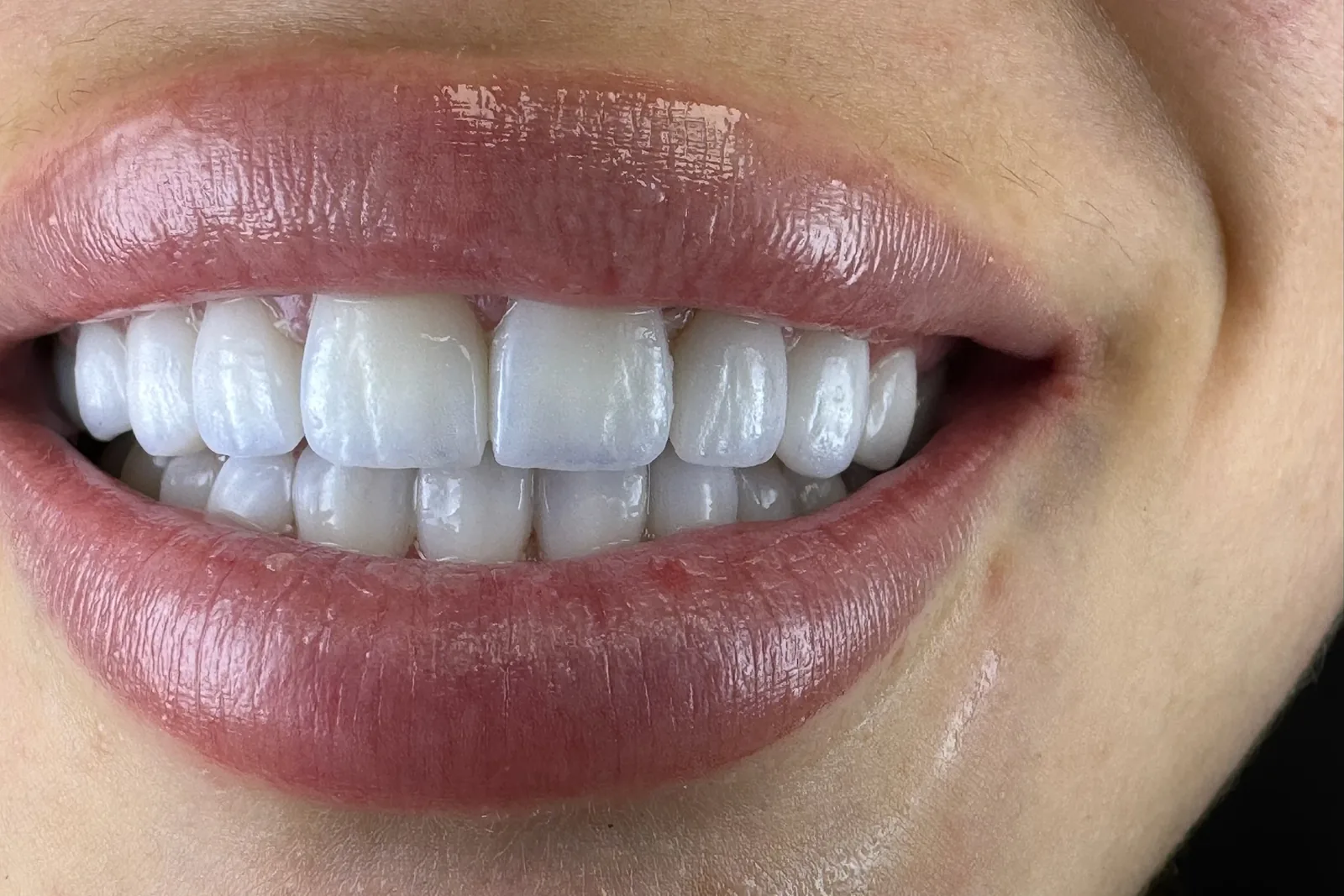
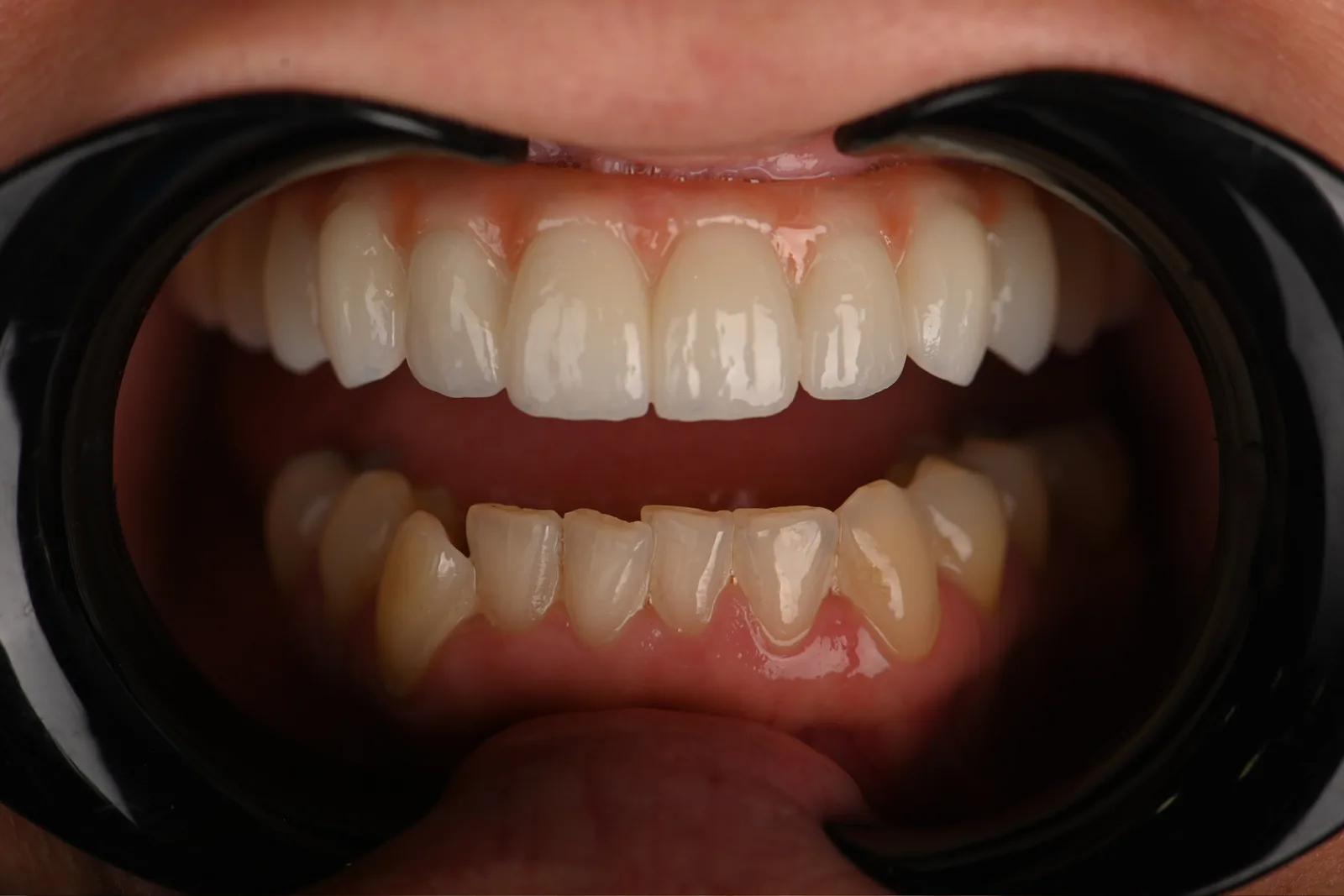
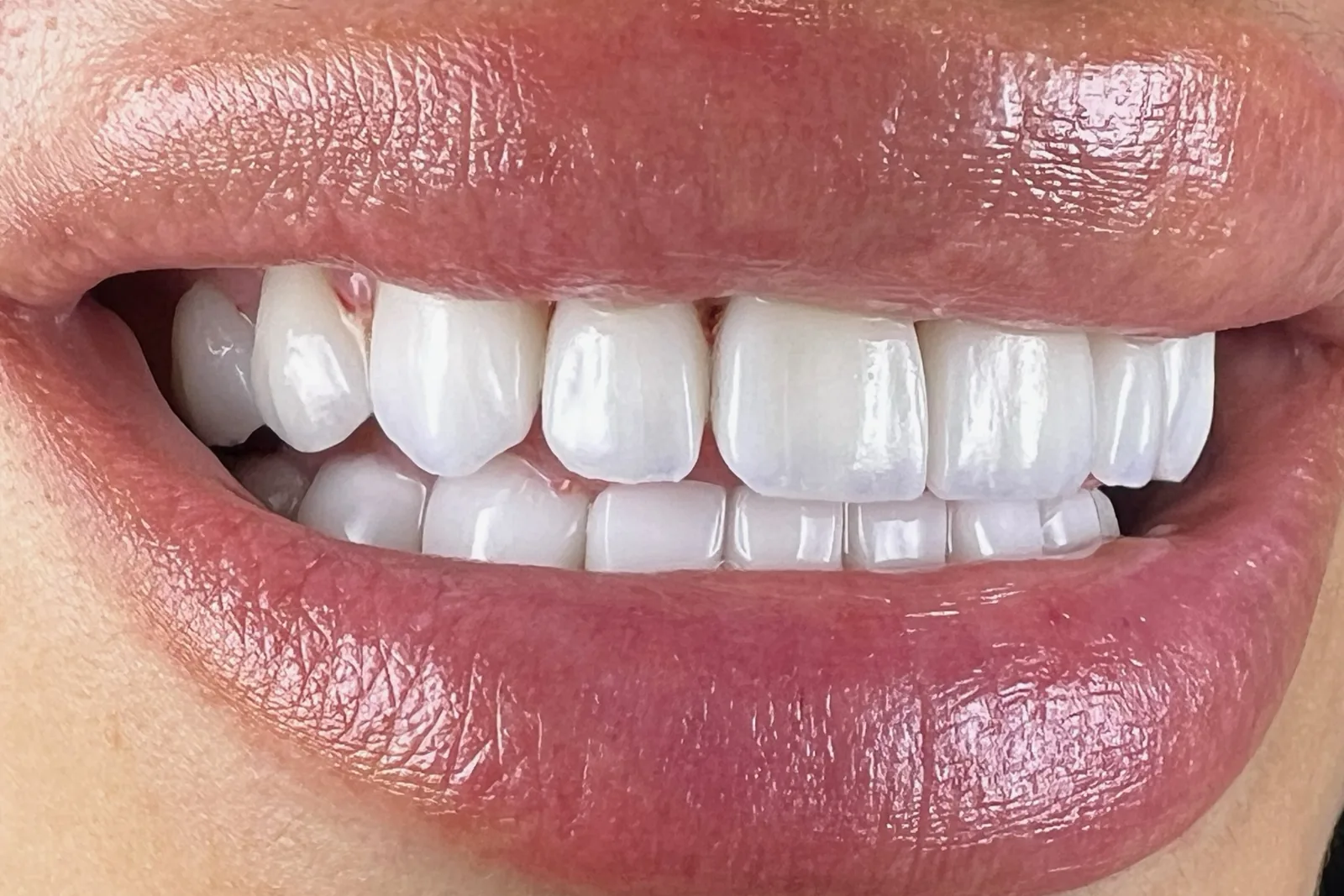
How long teeth whitening lasts depends mostly on what happens after the treatment: how often you drink coffee, tea or red wine, whether you smoke, and how well you brush and keep up with cleanings. Some sensitivity in the first days is common and usually passes. With good habits and occasional touch-ups, results can be kept for a long time.
Why whitening fades
Whitening lightens the stains inside the enamel. It does not make teeth stain-proof. From the first coffee after your appointment, the same things that darkened your teeth before start working on them again.
The speed of that comes down to habits more than to the product. Two people who whiten on the same day can look very different a year later, if one sips black coffee all day and the other mostly drinks water.
The usual suspects:
- Coffee and black tea
- Red wine
- Dark sodas and colas
- Tobacco, smoked or chewed
- Deeply colored sauces and berries
Our article on the truth about teeth whitening explains how whitening works and which stains respond best.
The first days after whitening
Right after treatment, many people notice two things.
Sensitivity. Teeth can feel sharp or achy with cold air, cold drinks or sometimes for no clear reason. Cleveland Clinic's article on whether teeth whitening is safe quotes a dentist saying it is very common to have temporary tooth sensitivity or gum irritation after starting a whitening product, and that both tend to go away quickly.
Gum irritation. The edge of the gums can look a little white or feel tender where the gel touched them. This also tends to settle on its own.
What usually helps in those days:
- Lukewarm drinks instead of very cold or very hot ones
- A toothpaste for sensitive teeth
- A soft brush and gentle strokes near the gums
- Following your dentist's instructions on how long to pause dark foods and drinks
If one tooth hurts more than the rest, the pain gets worse instead of better, or it lasts beyond the first days, call your dentist. Pain that sticks around can have another cause, like a cavity, a crack or exposed roots, and that needs to be checked. Our guide on tooth sensitivity: causes and treatment goes through the common ones.
Everyday habits that keep teeth whiter
You don't have to give up coffee. A few small changes make a real difference over months:
- Rinse with water or drink a glass of water after coffee, tea or wine.
- Use a straw for iced coffee, iced tea and dark sodas, so less liquid washes over the front teeth.
- Brush twice a day and clean between your teeth once a day. Plaque holds stains.
- Wait a little after acidic drinks, such as citrus juice or soda, before brushing, so you don't scrub softened enamel.
- If you smoke, quitting helps your color as much as your gums.
- Keep your regular cleanings. A professional cleaning removes surface stains that brushing leaves behind.
Cleveland Clinic also notes that whitening products are no substitute for good dental hygiene. They work on color. Cavities and gum disease still need the basics.

Touch-ups: when and how
Over time, most people notice their teeth slowly drifting back toward a darker shade. A touch-up is a shorter round of whitening to bring the color back up.
How often you need one depends on your habits, the shade you started with and the method you used. If you have custom whitening trays from your dentist, keep them: they are often used for touch-ups. Ask your dentist how often makes sense for you rather than guessing. Whitening too often can bring back the sensitivity.
Fillings, bonding, crowns and veneers don't change color
Whitening works on natural enamel. Tooth-colored fillings, composite bonding, crowns and porcelain veneers stay the color they were made in.
That has two practical consequences:
- If you already have visible work on your front teeth, it may look darker than your newly whitened teeth. Your dentist can tell you whether it should be replaced to match.
- If you plan new cosmetic work on visible teeth, whitening usually comes first, so the new work is matched to your final shade.
Teeth with brown or gray discoloration, or a single tooth that darkened after an injury, may not respond the way you expect. Cleveland Clinic points out that brown or gray discoloration can signal problems a bleaching kit won't fix. In those cases your dentist looks for the cause first.

Questions to ask at your visit
- Is my sensitivity normal for whitening, or should you check a tooth?
- How long should I avoid coffee, tea and wine after treatment?
- How often should I plan touch-ups, and with what?
- Will my fillings or crowns stop matching after whitening?
- Is there a stain here that whitening won't lift?
Where to be seen in South Florida
Art Dental Studio offers teeth whitening and follow-up care at three locations, with care in English and Spanish:
Miami / Hialeah (305) 922-2262 · Kendall (305) 395-3330 · Cooper City (954) 233-0707
If a tooth starts to hurt sharply or a filling breaks, dental emergency appointments are offered the same day whenever possible. If you have swelling of the face or neck, a high fever, or trouble swallowing or breathing, go to the emergency room or call 911.
The bottom line
No dentist can promise how long your whitening will last, because most of it happens after you leave the chair. Coffee, tea, red wine, tobacco and skipped cleanings pull the color back down; water, a straw, steady brushing and regular cleanings slow that down. Sensitivity in the first days is common and usually passes. If it doesn't, or one tooth hurts more than the others, have your dentist check it.
Art Dental Studio has three South Florida locations — Miami / Hialeah, Kendall and Cooper City — with care in English and Spanish. General dentistry, orthodontics, endodontics and periodontics work under one roof, in a clinic directed by Dr. Vivian Menendez.
Frequently asked questions
How long does teeth whitening last?
It depends mostly on what you do afterward: how much coffee, tea or red wine you drink, whether you smoke, and how well you brush and keep up with cleanings. No dentist can promise a fixed time. Occasional touch-ups, planned with your dentist, help keep the color.
Is sensitivity after teeth whitening normal?
Temporary tooth sensitivity and mild gum irritation are common after whitening and usually go away on their own. Lukewarm drinks, a toothpaste for sensitive teeth and a soft brush often help. If one tooth hurts more than the rest or the pain lasts beyond the first days, call your dentist.
Does whitening change the color of fillings or crowns?
No. Whitening works on natural enamel, so tooth-colored fillings, bonding, crowns and porcelain veneers keep the color they were made in. If you plan new cosmetic work on visible teeth, whitening usually comes first so the new work matches your final shade.