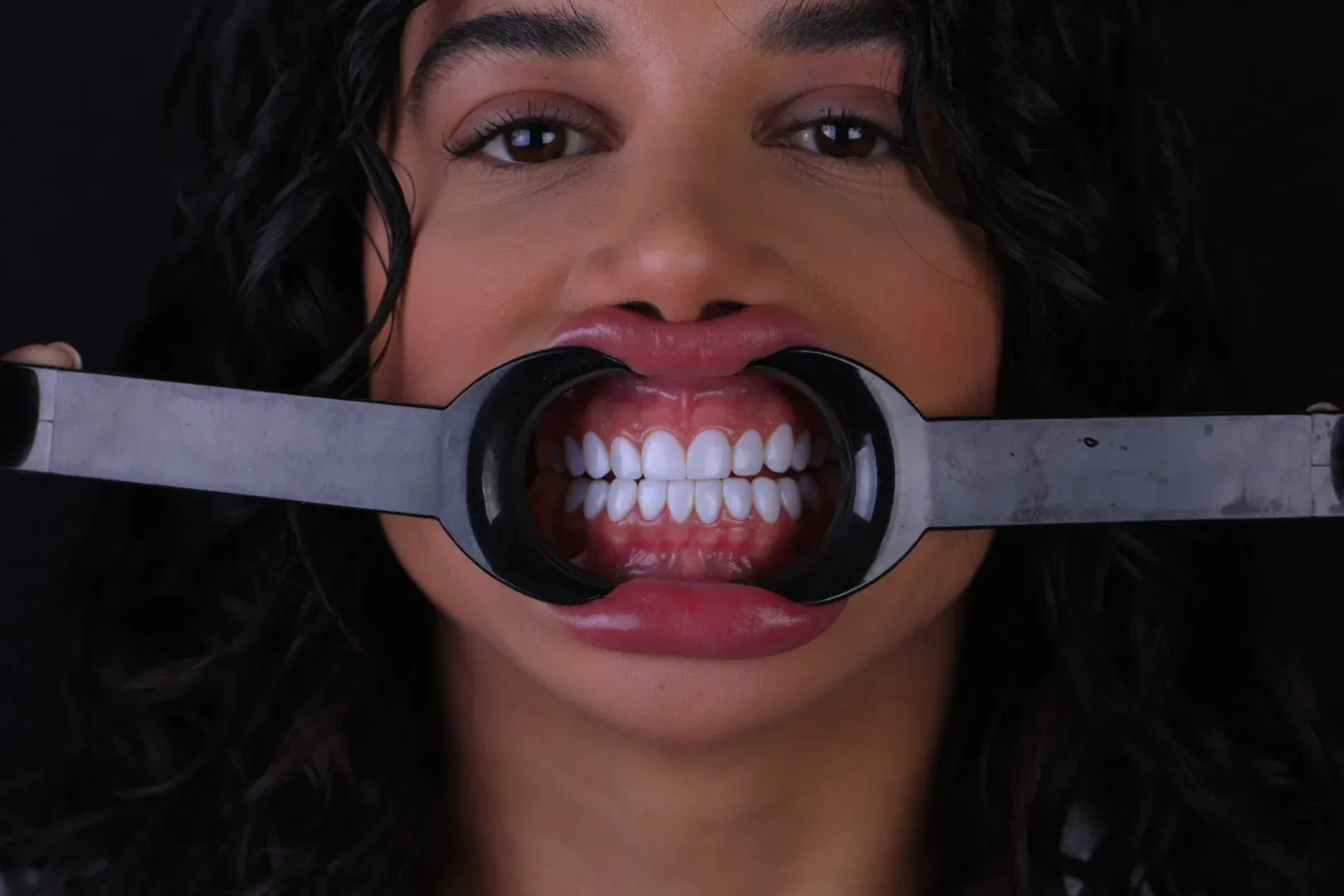
Porcelain crowns come in three main families: glass-ceramic such as e.max (the most lifelike for front teeth), zirconia (the strongest, often chosen for back teeth or heavy biters) and porcelain fused to metal (an older, proven option with a metal core). The right one depends on where the tooth is, how you bite and how natural it needs to look.
What a crown is, in one paragraph
A crown is a cap that covers the whole visible part of a tooth, from the gum line up. It's used when a tooth is too damaged, weak or worn for a filling to hold: after a large cavity, a crack, a root canal, or heavy wear. It's also the tooth that goes on top of a dental implant. The dentist shapes the tooth slightly, takes a scan or mold, and a lab makes the crown to fit. Our dental crowns in Miami page explains the treatment step by step.
"Porcelain crown" is a general name. Today it covers several ceramic materials that behave very differently.
Type 1: Glass-ceramic (e.max and similar)
Lithium disilicate — best known by the brand name e.max — is a ceramic with a glassy structure. That glass lets light pass through it a little, the way it passes through real enamel.
- Strength: good for most front teeth and many premolars.
- Looks: very natural; it can be layered and painted by hand to copy translucency and small details.
- Best for: front teeth and visible areas where beauty matters most.
- Keep in mind: in patients who grind hard, or on the back molars, the dentist may prefer something stronger.
This same family of materials is often used for porcelain veneers. If you're curious about the differences between ceramics, see our page on veneer materials.
Type 2: Zirconia
Zirconia is a very tough ceramic, white in color, that resists breaking under heavy force. There are two main styles:
- Solid (monolithic) zirconia: made from one block. Very strong, but more opaque — it can look less lifelike on front teeth.
- Layered zirconia: a zirconia core with porcelain added on the outside for a more natural look. The outer layer is more delicate than the core.
Newer translucent zirconias look better than older ones, but in general zirconia is chosen when strength comes first: back molars, people who clench or grind, or bridges that replace a missing tooth.
Type 3: Porcelain fused to metal (PFM)
This is the classic crown: a metal shell inside with porcelain baked on top. It's been used for decades and has a long track record.
- Strength: reliable.
- Looks: the metal blocks light, so the crown looks more opaque. Over time, if the gum recedes a little, a dark line can appear at the edge. This is the gray line many people notice on old crowns.
- Today: many dentists now prefer all-ceramic crowns for visible teeth, but PFM can still be the right choice in specific cases.
Side by side
| Glass-ceramic (e.max) | Zirconia | Porcelain fused to metal | |
|---|---|---|---|
| Natural look | Highest | Good to very good (depends on type) | Fair; can show a dark edge |
| Strength | Good | Highest | High |
| Typical place | Front teeth, premolars | Molars, heavy biters, bridges | Varies; less common in front |
| Metal inside | No | No | Yes |
How the dentist chooses for you
The material isn't chosen from a catalog. It depends on:
- Where the tooth is. Front teeth are seen up close; back molars take most of the chewing force.
- How you bite. If you grind or clench (bruxism), strength matters more.
- How much tooth is left. A tooth with little structure, or one that has had a root canal, may need a different design.
- The color underneath. A dark tooth or a metal post below may need a more opaque material to hide it.
- The neighbors. A single front crown must match the teeth around it.
Why who makes the crown matters
Two crowns of the same material can look completely different. A glass-ceramic crown made in a high-volume lab from a photo isn't the same as one shaped and painted by a ceramist who has seen your teeth.
At Art Dental Studio, crowns are made in our own lab by master ceramist Enrique. He can look at your natural teeth under the right light, compare color in person, and adjust the crown before it's placed. Learn more about our in-house dental lab.
Caring for a porcelain crown
- Brush twice a day and clean between teeth — the crown can't get a cavity, but the tooth under its edge can.
- If you grind your teeth, ask about a night guard to protect both crowns and natural teeth.
- Avoid using your teeth as tools (opening packages, biting ice or pens).
- Keep regular cleanings and check-ups so the dentist can check the gum and the edge of the crown.
With good care, a well-made crown usually lasts many years; how long depends on your habits and bite.
Questions to ask at your consultation
- Why do I need a crown instead of a filling?
- Which material do you recommend for this tooth, and why?
- Who makes the crown, and will the ceramist see my teeth?
- How will you match the color with my other teeth?
- I grind my teeth — does that change the material?
If cost is part of your decision, the consultation is free and you leave with a written estimate. You can also read about financing options.
The bottom line
"Porcelain crown" isn't one thing. Glass-ceramic gives the most natural look, zirconia gives the most strength, and porcelain fused to metal is a proven classic with aesthetic limits. The right choice depends on the tooth, your bite and the hands that make it.
Art Dental Studio offers complimentary consultations at three South Florida locations — Miami, Cooper City and Kendall — with bilingual care in English and Spanish. Every crown is hand-crafted in-house by master ceramist Enrique, under the direction of Dr. Vivian Menendez (DMD · ADA · AACD · Invisalign Preferred Provider).
Frequently asked questions
Which porcelain crown looks the most natural?
Glass-ceramic crowns such as e.max usually look the most lifelike, because they let light pass through a little like real enamel. They are often chosen for front teeth. Zirconia is stronger but, depending on the type, can look more opaque.
Is zirconia better than e.max?
Neither is better in every case. Zirconia gives the most strength and is often used for molars, bridges and people who grind. Glass-ceramic gives the most natural look for visible teeth. Your dentist chooses based on the tooth, your bite and the color underneath.
Why do old crowns show a dark line at the gum?
Many older crowns are porcelain fused to metal. The metal inside blocks light, and if the gum recedes a little over time, the metal edge can show as a gray line. All-ceramic crowns avoid that metal edge.