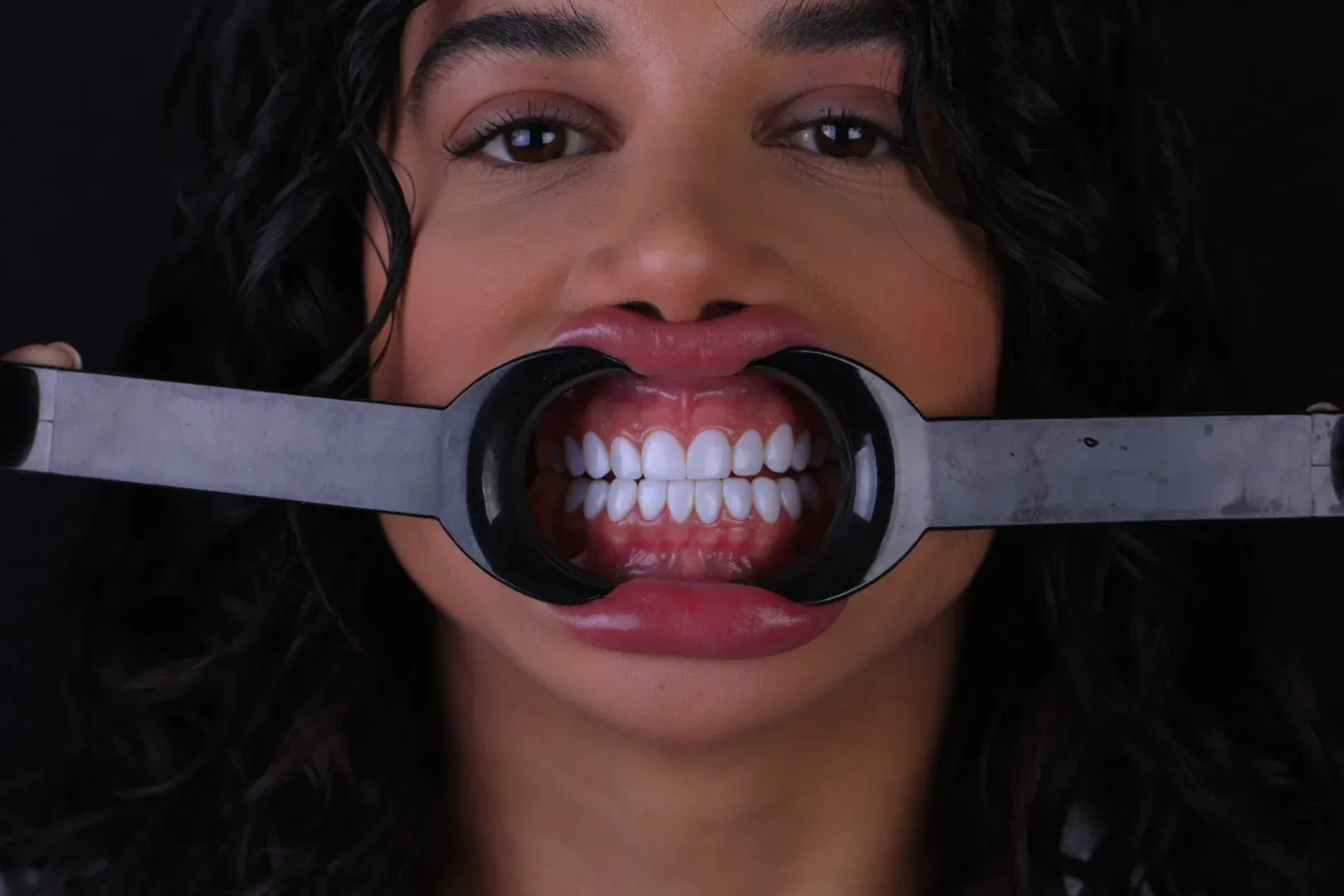
Teeth wear down mainly from grinding or clenching (bruxism), acid erosion from drinks, reflux or diet, and brushing too hard. Mild wear can be repaired with bonding; moderate wear with veneers or crowns; and severe wear across the whole mouth with a planned reconstruction. Whatever the repair, the cause must be controlled first — often with a night guard.
What "worn teeth" looks like
Tooth wear happens slowly, so many people only notice it when someone points it out or when they see an old photo. Common signs:
- Front teeth that look shorter, flat or straight across, like they've been filed.
- Edges that look thin or see-through, or that chip easily.
- Yellow areas where the white enamel has worn away and the darker layer underneath shows.
- Small cups or dents on the chewing surfaces of back teeth.
- Sensitivity to cold or sweets.
- A face that looks a bit older, because short teeth can make the lower face look shorter.
The three main causes
1. Grinding and clenching (bruxism). Many people grind or clench their teeth during sleep, or clench during the day without noticing. The constant force flattens the edges and can crack teeth or old fillings. Signs include sore jaw muscles in the morning, headaches near the temples, or a partner hearing grinding at night.
2. Acid erosion. Acid softens enamel — the hard, outer layer of the tooth — and then normal chewing and brushing wear it away faster. Acid can come from:
- Sodas, sports drinks, citrus juices, sparkling water with flavor, wine.
- Frequent sipping throughout the day.
- Acid reflux (stomach acid that comes up), sometimes without heartburn.
- Frequent vomiting from any cause.
Erosion often appears as smooth, shiny, rounded wear, sometimes on the inside of the upper front teeth.
3. Abrasion. Brushing too hard, using a hard toothbrush or very abrasive pastes, or habits like biting nails, pens or holding pins can wear grooves near the gum line or chip edges.
Most people have a mix of causes. Finding them is part of the diagnosis.
Why you shouldn't just "build the teeth back up"
If teeth are rebuilt while the cause is still active, the new restorations face the same forces and acids. Porcelain and resin are strong, but grinding can chip them, and acid keeps eroding the natural tooth around them. That's why a good plan starts with:
- A night guard (a custom plastic appliance worn while sleeping) if you grind or clench. It takes the force instead of your teeth.
- Diet and habit changes to reduce acid contact — for example, drinking acidic drinks with meals rather than sipping all day.
- Medical follow-up if reflux is suspected. Your dentist may suggest talking to your doctor.
Treatment options by severity
Mild wear. Small flat spots or thin edges can often be repaired with bonding: tooth-colored resin added to the edges to restore length and shape. It's conservative and can be redone over time.
Moderate wear on front teeth. Porcelain veneers can restore length and shape on the front teeth while improving color. In worn teeth, veneers sometimes need little or no additional reduction, because the wear has already removed enamel. Learn about porcelain veneers.
Moderate to severe wear on back teeth. Crowns or partial ceramic restorations cover and protect teeth that have lost a lot of structure. See dental crowns.
Severe wear across the mouth. When many teeth are worn, the bite often "collapses": the face's vertical height can shrink and there may not be room to simply add material. In those cases the dentist may plan a full-mouth reconstruction, rebuilding the teeth together and sometimes carefully restoring some of the lost height of the bite. It's a careful, step-by-step process. See full-mouth reconstruction.
A quick guide
| Level of wear | Common treatment | Always add |
|---|---|---|
| Mild, edges only | Bonding | Night guard if grinding |
| Moderate, front teeth | Porcelain veneers | Night guard; control acid |
| Moderate, back teeth | Crowns or partial restorations | Night guard; control acid |
| Severe, many teeth | Planned reconstruction | Night guard; follow-up |
Testing the new length before it's final
When teeth are lengthened, the lips, speech and bite need time to adapt. That's why, in larger cases, a provisional phase is common: you wear temporary restorations with the planned shape and length, and the team checks how you speak, chew and look before making the final pieces. At Art Dental Studio, this "test drive" lets you see and feel the result first, and final restorations are made in our in-house dental lab by master ceramist Enrique.
Questions to ask at your consultation
- What is causing my wear — grinding, acid, brushing or a mix?
- Is the wear still active, and how do we stop it?
- Do I need a night guard?
- Can I start with bonding, or do I need veneers or crowns?
- Has my bite lost height, and does that change the plan?
The consultation is free and you leave with a written estimate. For larger plans, you can also ask about financing.
The bottom line
Worn teeth are a sign of a force or an acid that's still working. Identify the cause, protect the teeth — usually with a night guard — and then restore with the most conservative option that fits: bonding, veneers, crowns or a planned reconstruction.
Art Dental Studio offers complimentary consultations at three South Florida locations — Miami, Cooper City and Kendall — with bilingual care in English and Spanish. Restorative and cosmetic dentistry work together under one roof, and every crown and veneer is hand-crafted in-house by master ceramist Enrique, under the direction of Dr. Vivian Menendez (DMD · ADA · AACD · Invisalign Preferred Provider).
Frequently asked questions
What causes teeth to wear down?
The main causes are grinding or clenching (bruxism), acid erosion from drinks, reflux or frequent vomiting, and abrasion from brushing too hard or habits like biting nails or pens. Most people have a mix, and finding the cause is part of the diagnosis.
Can worn teeth be built back up?
Yes. Mild wear is often repaired with bonding, moderate wear with veneers or crowns, and severe wear across many teeth with a planned reconstruction. The cause should be controlled first, or the new restorations face the same forces and acids.
Do I need a night guard?
If you grind or clench, a custom night guard is usually recommended. It takes the force instead of your teeth and protects both natural teeth and new restorations. Your dentist checks for signs of grinding during the exam.