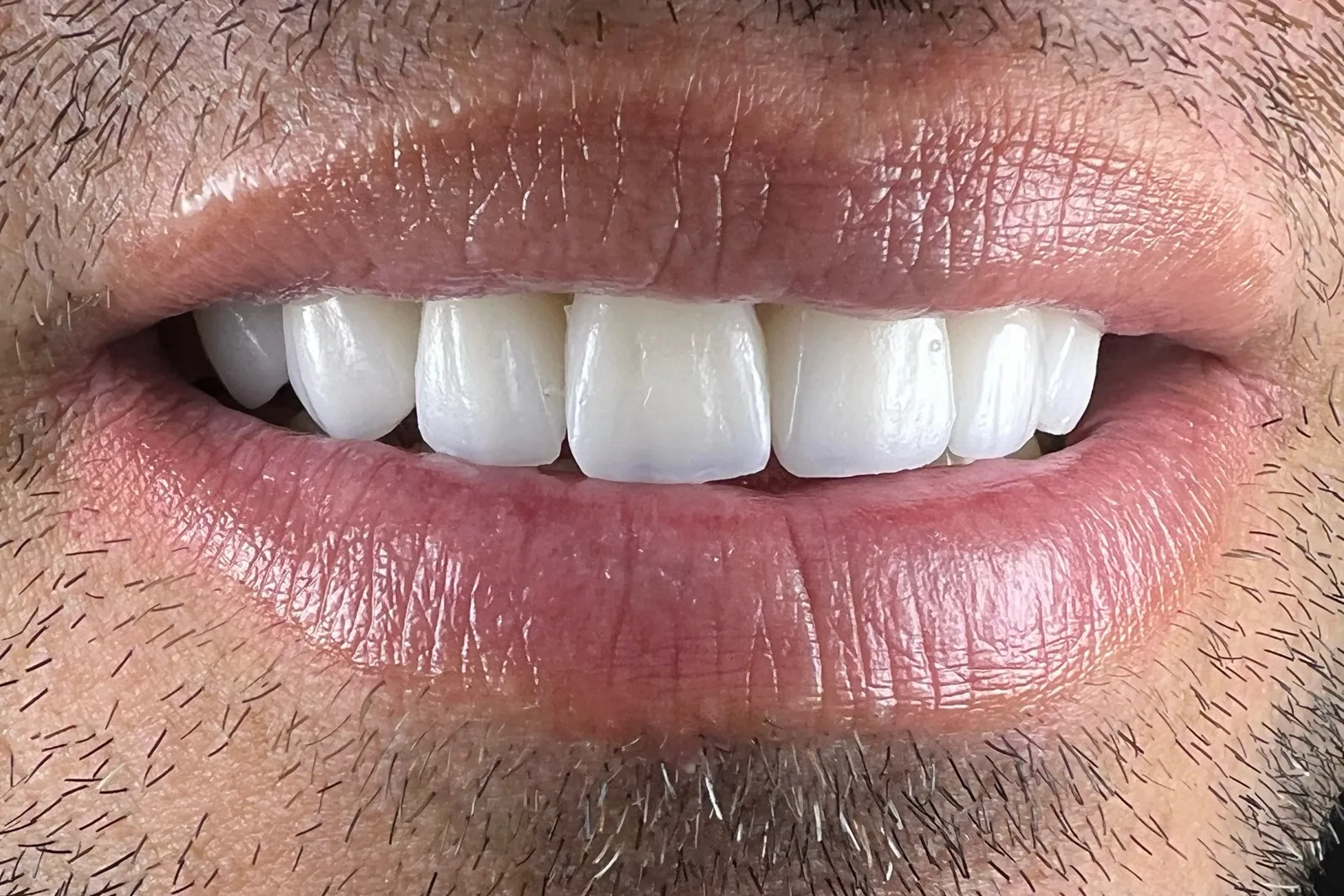
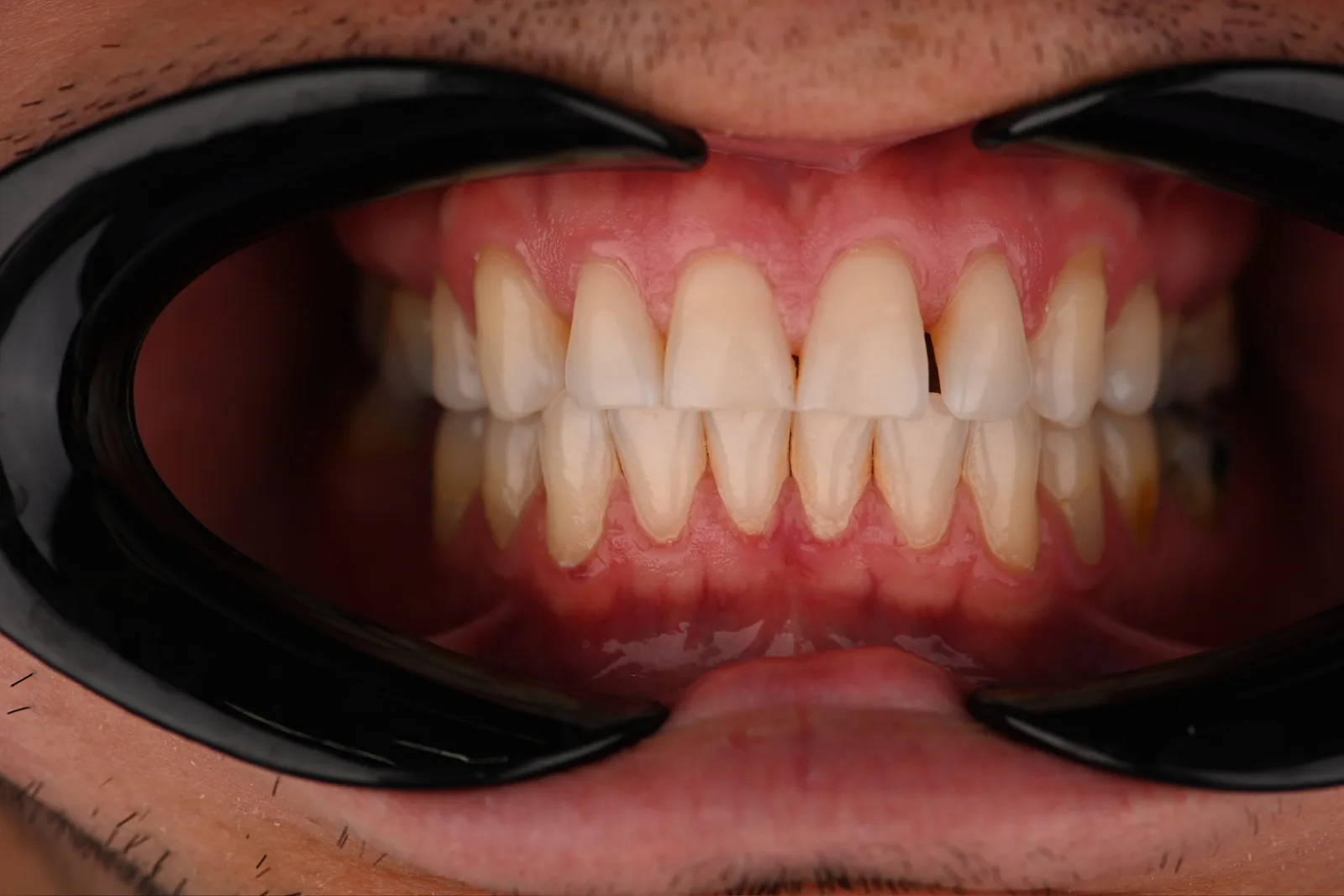
A handcrafted smile design is a different investment because it takes more time and more skill than a veneer made in series. Behind it there is a design you approve before your teeth are touched, conversations with the doctor, a ceramist who builds and paints the porcelain by hand, and fit checks until the result looks like you. You are paying for that time and that craft, not for a product off a shelf.
Handmade vs. made in series: what's the difference
Most people picture a veneer as one thing: a thin, white shell glued to the front of a tooth. In reality, two veneers can look alike in a brochure and be made in very different ways.
- Made in series: shapes come from a standard library, the color is picked from a shade chart, and the porcelain is often milled or pressed in a single color. It can be a reasonable option, and it is faster to produce.
- Handcrafted: the shape is designed for your face, the porcelain is built up in thin layers, and the color is mixed and painted by hand — ideally by someone who has actually seen you smile.
Neither word is a guarantee of quality on its own. But the second path simply takes more hours, more steps and more people who know your case. That is where the difference in investment comes from.
What goes into a handcrafted smile design
1. A design before anything is permanent
A careful smile design starts on a screen, not on your teeth. Photos, scans and measurements of your face, lips and gums are used to plan the length, shape and proportion of each tooth. Our guide on digital smile design explains what that design looks at.
Then the design is tried in your mouth. With a trial smile, the planned shape is copied onto your teeth in temporary material so you can see it, feel it when you talk and show it to the people you trust. If something feels off, it is changed now — while changing it is still easy.
2. A real conversation with the doctor
A smile design is personal. Some people want something barely noticeable; others want a clear change. At Art Dental Studio, Dr. Vivian Menendez leads the practice and its smile design work, and the plan comes out of a conversation with you: what bothers you, what you like about your smile, how you want to look in photos and in person. That time is part of the work — not a sales step.
3. A ceramist who works next to the doctor
At Art Dental Studio, porcelain veneers are hand-crafted by master ceramist Enrique in the clinic's own in-house lab, working alongside the doctor. Because he is in the same building, he can see you in person and adjust color and shape with you, instead of working only from a photo and a number on a shade chart. If you want to understand his role in detail, read what a master ceramist does.
4. Porcelain built and painted in layers
Natural teeth are not one flat color. They are slightly more opaque near the gum, more translucent at the edge, and full of small variations. A handcrafted veneer recreates that with thin layers of porcelain and hand-painted details, so it reflects light the way enamel does. Each layer takes time to place and fire, and it takes an experienced eye to know when to stop. Our veneer shade guide explains why "whiter" is not always more natural.
5. Fit checks and adjustments
Before the final veneers are bonded, they are checked against your teeth, your bite and your lips. Small changes in length, an edge or a shade can still be made at this stage. After placement, follow-up visits let your dentist review how your bite feels and how your gums respond. These visits are part of a careful result, and they add time too.
Where the time goes, step by step
| Step | What happens | Why it takes time |
|---|---|---|
| Design | Photos, scans and a digital plan of your new smile | Proportions are planned for your face, not taken from a template |
| Trial smile | The design is tested in your mouth in temporary material | You approve the look before anything is permanent |
| Conversation | You and the doctor agree on the goal | A smile that fits you starts with what you want |
| Layered porcelain | The ceramist builds and paints the veneers by hand | Thin layers, several firings and fine color work |
| Try-in and follow-up | Fit, bite and shade are checked and refined | Small adjustments are what make the result look natural |

Is a handcrafted design always the right choice?
Not always, and an honest clinic will tell you so. Sometimes the best answer is simpler: whitening, bonding, or aligning the teeth first. Our guides on a smile makeover without veneers and veneers vs. bonding walk through those options. Your dentist evaluates your teeth, gums and bite and explains what fits your case.
Handcrafted porcelain makes the most sense when the result has to look natural up close: front teeth that show when you talk and laugh, a smile that needs to match your skin tone and lips, or a case where only a few teeth are being changed and they need to blend with the rest.
How to compare quotes fairly
When you compare estimates from different clinics, make sure you are comparing the same thing. Ask every clinic the same questions:
- Who makes the porcelain? A ceramist you can meet, or an outside lab?
- Where is it made? In the same building, or shipped elsewhere?
- Will I see a trial before anything is permanent? A digital preview, a trial in my mouth, or both?
- Is the color made for me? Will someone see me in person to match the shade?
- Are these veneers or crowns? Ask tooth by tooth. They are different treatments.
- What is included? Design, trial, temporaries, try-in visits, adjustments and follow-up — which of these are part of the estimate?
- Who do I see if something needs adjusting later?
Two estimates that look different may describe two very different treatments. If you are weighing treatment far from home, our guide on veneers abroad vs. in Miami adds the questions that matter for follow-up care.

Planning for the investment
Every mouth is different, so every plan is different. To understand what changes the estimate — the number of teeth, the material, whether other treatment is needed first — see what determines the cost of veneers. If you'd like to spread the investment over time, ask about financing options.
The bottom line
A handcrafted smile design asks for more time and more craft: a design you approve first, real conversations with the doctor, a ceramist who builds and paints the porcelain by hand next to her, and careful fit checks. That is what you are investing in. Compare clinics by asking who makes the porcelain, where, and what the plan includes — and choose the team whose answers you understand. When you're ready, book a consultation to talk it through.
Art Dental Studio offers consultations at three South Florida locations — Miami / Hialeah, Kendall and Cooper City — with care in English and Spanish. Dr. Vivian Menendez leads the practice and its smile design work, and porcelain veneers are hand-crafted in the clinic's own lab by master ceramist Enrique, working alongside her.
Frequently asked questions
Why does a handcrafted smile design cost more?
It takes more time and skill: a design you approve first, a trial smile, conversations with the doctor, porcelain built and painted by hand in layers, and fit checks before and after placement.
How do I compare smile design quotes fairly?
Ask every clinic who makes the porcelain and where, whether you will see a trial before anything is permanent, whether they are veneers or crowns, and exactly what the estimate includes.
Is a handcrafted design always the best option?
Not always. Sometimes whitening, bonding or aligning the teeth first fits better. Your dentist evaluates your teeth, gums and bite and explains what suits your case.