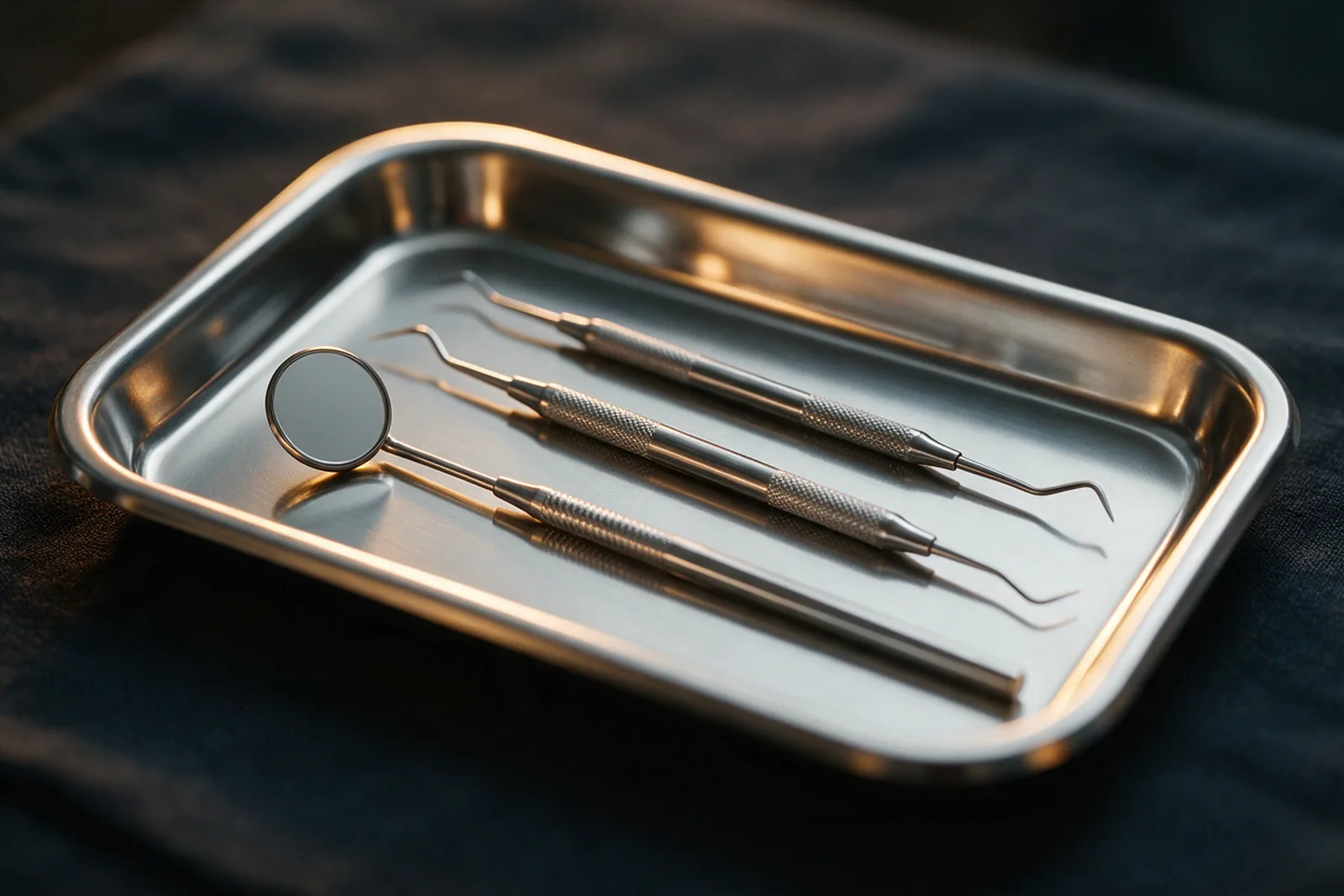
Bad breath that lasts despite brushing usually starts in the mouth, not the stomach. The most common sources are bacteria on the back of the tongue, plaque and tartar along the gums, gum disease, cavities, old fillings that trap food, and dry mouth. A dental exam finds the source so the fix targets the cause, not just the smell.
Where persistent bad breath usually comes from
Morning breath and the smell after garlic or coffee are normal and fade quickly. Breath that stays unpleasant all day, every day, is different. It usually means something is feeding odor-producing bacteria. The usual suspects:
- The tongue. The rough surface at the back of the tongue holds a film of bacteria and food debris. It is one of the most common sources, and it is easy to miss if you only brush your teeth.
- Plaque and tartar. Once plaque hardens into tartar along the gum line, a toothbrush can no longer remove it, and bacteria keep living there.
- Gum disease. Inflamed gums form small pockets around the teeth where bacteria thrive out of reach. A stubborn smell together with gums that bleed when you brush is a classic combination.
- Cavities and broken fillings. Holes, cracked restorations and loose crowns trap food in places you cannot clean.
- Dry mouth. Saliva rinses bacteria away. When there is less of it, from mouth breathing, some medications, dehydration or simply sleeping, odor builds up faster.
- Food, tobacco and alcohol. Strong foods, smoking and alcohol all leave their own smell and also dry the mouth.
When the cause is not in your mouth
Most cases are dental, but not all. A few other sources are worth knowing about:
- Sinuses and throat. Postnasal drip and small whitish deposits in the tonsils (tonsil stones) can produce a strong odor.
- Acid reflux. Stomach acid rising into the throat can affect breath, often with a sour taste.
- General health. A sweet or fruity smell, or breath that changes suddenly along with other symptoms, is something to mention to your physician as well as your dentist.
This is why a dental exam is the logical first step. If your mouth is ruled out as the source, you know to look elsewhere instead of trying one product after another.
Signs your bad breath needs a dental visit
Book an exam rather than waiting it out if you notice any of these:
- The smell continues even after brushing, flossing and cleaning your tongue for a couple of weeks.
- You have a bad taste in your mouth that keeps coming back.
- Your gums bleed, look red or feel puffy.
- A tooth is sensitive, painful or has a visible dark spot or hole, which can point to a cavity.
- Food keeps getting stuck in the same spot.
- Someone close to you mentions it, or you notice it yourself in the middle of the day.
One situation needs same-day attention: a swollen, painful area of the gum, a small "pimple" on the gum or a foul taste that comes with swelling can be a sign of infection. That belongs in emergency dental care, not a routine appointment. If you have swelling in your face or neck, a high fever, or difficulty swallowing or breathing, go to the emergency room or call 911.

What happens at the dental visit
The goal of the visit is to find the source. In general, your dentist will:
- Ask questions about when the smell is worse, your medications, dry mouth, snoring or mouth breathing, and your home routine.
- Examine your teeth, gums and tongue, looking for cavities, damaged fillings, tartar and signs of inflammation.
- Measure the gum pockets around your teeth to check for gum disease.
- Recommend a cleaning to remove plaque and tartar. If the gums show deeper pockets, a deep cleaning may be the next step rather than a regular one.
From there, treatment follows the cause. A cavity gets filled, a broken restoration gets replaced, and gum disease is treated by stage. When the gums need specialized care, Art Dental Studio has a periodontist working in the same clinic, so you are not sent elsewhere to start over.
What you can do at home starting today
Home care will not fix a cavity or gum disease, but it makes a real difference in everyday breath:
- Brush twice a day for two minutes, paying attention to the gum line.
- Clean your tongue every day with a tongue scraper or your toothbrush, reaching toward the back.
- Floss or use interdental brushes once a day. Food trapped between teeth is a common source of odor.
- Drink water throughout the day, especially if your mouth tends to feel dry.
- Be careful with mouthwash. Strong rinses can mask the smell for an hour or two without removing the cause. Some contain alcohol, which can dry the mouth further. Ask your dentist which type suits your case.
- Clean any removable appliance such as a retainer or partial denture every day, as directed.

Questions to ask at your visit
- Is the source of my bad breath in my mouth, and where exactly?
- Do I have signs of gum disease, and how deep are my gum pockets?
- Do I need a regular cleaning or a deep cleaning?
- Could my medications or dry mouth be playing a role?
- Is there anything I should bring up with my physician?
Where to be seen in South Florida
Art Dental Studio has three locations, with care in English and Spanish:
If you have pain or swelling, call and mention it. We offer same-day emergency appointments whenever possible.
The bottom line
Bad breath that does not go away is a signal, not a personal failing. In most cases it comes from bacteria on the tongue, tartar, gum disease, cavities or dry mouth, and each of those has a specific treatment. Mints and strong rinses only cover the smell. A dental exam finds the source so you can treat the cause and stop guessing.
Art Dental Studio has three South Florida locations — Miami / Hialeah, Kendall and Cooper City — with care in English and Spanish. General dentistry, orthodontics, endodontics and periodontics work under one roof, in a clinic directed by Dr. Vivian Menendez.
Frequently asked questions
Why do I still have bad breath after brushing?
Brushing your teeth does not reach every source. Bacteria on the back of the tongue, tartar along the gum line, gum pockets, cavities and dry mouth can all keep producing odor. A dental exam identifies which one is behind it so the treatment targets the cause.
Can gum disease cause bad breath?
Yes. Inflamed gums form pockets around the teeth where bacteria multiply out of reach of the toothbrush. Bad breath combined with gums that bleed or look puffy is a common sign that a professional cleaning or gum evaluation is needed.
When should I see a dentist for bad breath?
See a dentist if the smell persists after a couple of weeks of brushing, flossing and cleaning your tongue, or if it comes with a bad taste, bleeding gums or tooth pain. Swelling with a foul taste needs same-day attention, and facial swelling, high fever or trouble swallowing or breathing calls for the emergency room or 911.