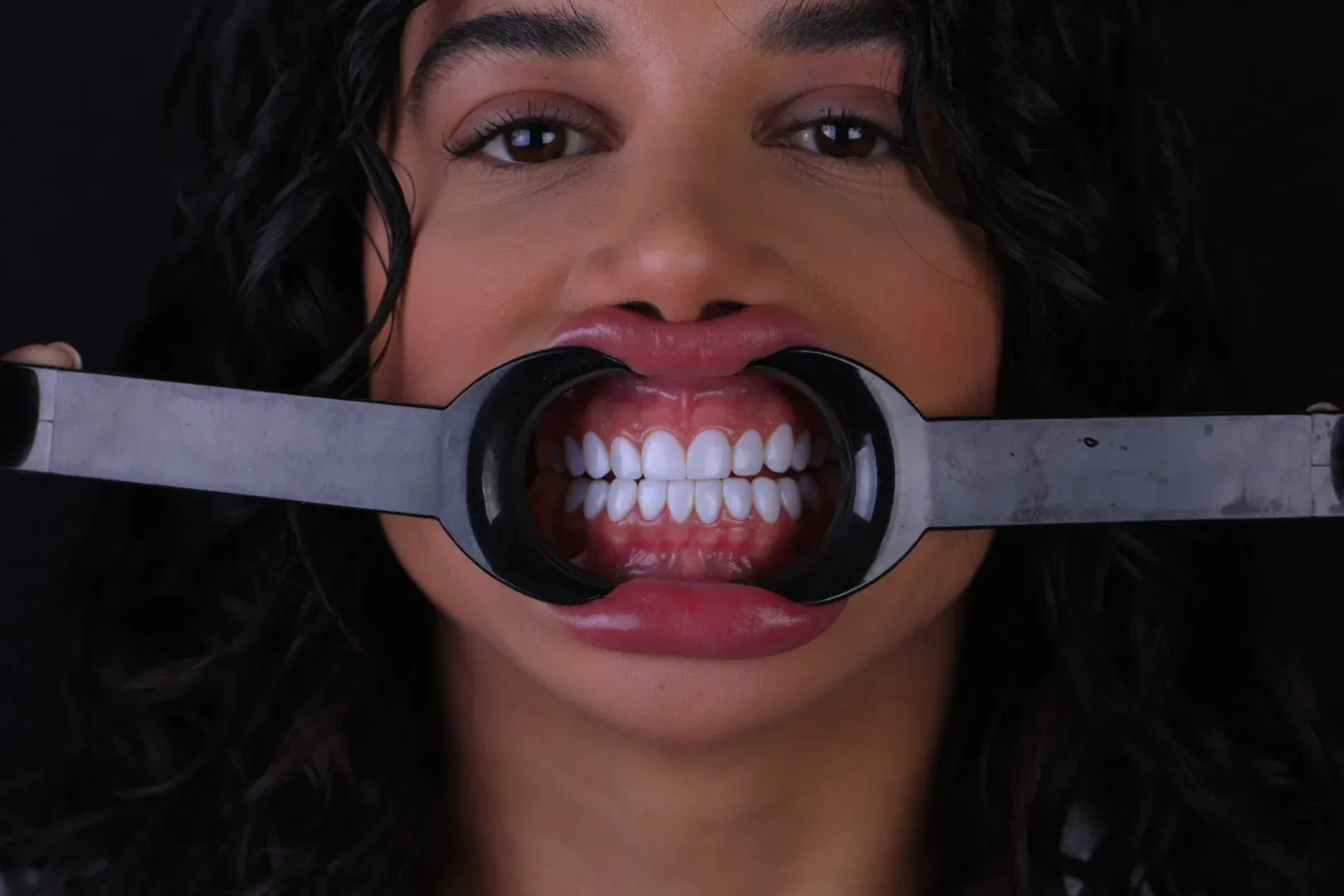
Yes, you can change your smile a lot without veneers. Combining Invisalign to align the teeth, professional whitening to brighten them, bonding to fix small chips and gaps, and gum contouring to even out the gum line can transform many smiles while keeping your natural enamel. Whether it's enough depends on what bothers you most.
Start with what you actually want to change
A "smile makeover" sounds like one treatment, but it's really a list of small problems solved in the right order. Before thinking about any procedure, it helps to name what bothers you:
- Position: crooked, crowded or spaced teeth.
- Color: yellow, dull or stained teeth.
- Shape: chipped edges, uneven lengths, small teeth.
- Gums: a "gummy" smile or an uneven gum line.
Veneers can address shape and color at once, but they're not the only tool. When the main problems are position, color or gums, other treatments often do the job with less impact on the tooth.
Tool 1: Invisalign to fix position
Clear aligners — removable plastic trays that move teeth gradually — solve crowding, gaps and rotation. Straight teeth alone change a smile more than most people expect: the light reflects evenly, the arch looks wider and fuller, and teeth seem more uniform even before anything else is done.
It also sets up everything that comes after. Bonding and whitening look better on well-aligned teeth. Learn more about Invisalign in Miami.
Tool 2: Professional whitening for color
Whitening lightens the natural color of your teeth from within, using a bleaching gel. It works best on stains from coffee, tea, wine, tobacco and age.
What to know:
- It doesn't change the color of fillings, crowns or bonding — those stay the same shade.
- Some teeth, especially gray tones or certain internal stains, respond less.
- Temporary sensitivity is common and usually passes.
Because restorations don't whiten, it's usually done before bonding, so the bonding can match your new shade. For a frank look at what whitening can and can't do, read the truth about teeth whitening.
Tool 3: Bonding for shape and small details
Composite bonding is a tooth-colored resin that the dentist sculpts directly onto the tooth and hardens with a light. It can:
- Fill small gaps between teeth.
- Repair chipped or uneven edges.
- Lengthen a short tooth slightly.
- Change the outline of a tooth that looks too narrow or pointed.
Usually little or no enamel is removed. The trade-off is that resin can stain and wear faster than porcelain and may need polishing or touch-ups over time.
Tool 4: Gum contouring for a balanced frame
Sometimes teeth look short not because they are, but because extra gum covers them, or the gum line is higher on one tooth than its neighbor. Gum contouring is a procedure in which a gum specialist (a periodontist) reshapes the gum tissue to reveal more tooth and even out the line.
It's not right for everyone. It depends on the bone under the gum and the cause of the "gummy" look — some causes are related to the lip or the jaw, not the gum. Your dentist examines this before recommending it. Our periodontics team evaluates gum health and shape.
How the tools combine
| What bothers you | Main tool | Common partner |
|---|---|---|
| Crooked or crowded teeth | Invisalign | Bonding to finish edges |
| Yellow or dull teeth | Whitening | — |
| Small chips or gaps | Bonding | Whitening first |
| Short teeth or gummy smile | Gum contouring | Bonding to refine shape |
| A mix of everything | A combined plan | Order matters |
A typical order is: gums healthy → align → whiten → contour gums if needed → bond. Each step makes the next one easier and more natural.
When veneers may still be the better answer
Being honest about the limits is part of a good plan. Veneers may make more sense if:
- Teeth are badly worn, very discolored or have many large old fillings.
- You want a big change in shape and size across many teeth.
- You'd prefer a material that resists staining better than resin.
Even then, aligning and whitening first often means fewer or thinner veneers. Our natural-looking smile guide talks about why less is often more.
How we plan it at Art Dental Studio
Here, orthodontics, periodontics and cosmetic dentistry work under one roof, so a combined plan doesn't mean visiting three offices. At your free consultation, the team checks gums and bite first, and you can see a digital preview of what a combined approach might achieve. Learn how our smile design process works.
Questions to ask at your consultation
- Which of my concerns can be solved without veneers?
- In what order should the treatments happen, and why?
- Will whitening affect my existing fillings or crowns?
- Am I a candidate for gum contouring?
- How should I care for bonding so it lasts?
The bottom line
A beautiful smile isn't always a veneered smile. Aligning, whitening, bonding and gum contouring — combined in the right order — can create a big change while preserving your natural teeth. Ask for a plan that starts with the least invasive steps and adds more only if you need it.
Art Dental Studio offers complimentary consultations at three South Florida locations — Miami, Cooper City and Kendall — with bilingual care in English and Spanish. Orthodontics, periodontics and cosmetic dentistry work together under one roof, under the direction of Dr. Vivian Menendez (DMD · ADA · AACD · Invisalign Preferred Provider); when veneers are the right choice, every one is hand-crafted in-house by master ceramist Enrique.
Frequently asked questions
Can I improve my smile without veneers?
Often, yes. When the main concerns are position, color or the gum line, combining Invisalign, professional whitening, bonding and gum contouring can create a big change while keeping your natural enamel. Your dentist will tell you what each option can achieve in your case.
Should I whiten before bonding?
Usually, yes. Whitening only changes natural teeth, not resin, fillings or crowns. Whitening first lets the dentist match the bonding to your new, lighter shade, so the natural teeth and the resin blend together evenly.
When are veneers still the better option?
Veneers may make more sense when teeth are badly worn, very discolored or have many large old fillings, or when you want a big change in shape and size across many teeth. Even then, aligning and whitening first can mean fewer or thinner veneers.