Getting a dental implant should not hurt during the procedure: the area is fully numbed with local anesthesia, and sedation is available if you're anxious. You'll feel pressure and vibration, not pain. Afterward, most people describe a few days of soreness and swelling, often milder than they expected and usually manageable with prescribed or over-the-counter medication.
Why people expect it to hurt more than it does
"Surgery," "screw" and "jawbone" are scary words. Put together, they paint a picture much worse than the experience most patients report. Two facts help put it in perspective:
- Bone has few pain nerves compared with skin and gums. Most of what you could feel comes from the gum tissue, and that is exactly what local anesthesia numbs.
- A single implant is often a shorter, gentler procedure than people imagine, frequently compared to having a tooth pulled.
None of this means you'll feel nothing at all afterward. It means pain is something your dental team plans for and controls, not something you have to "tough out."
During the procedure: what you actually feel
With local anesthesia, the area goes numb in a few minutes. Your dentist checks that it's fully numb before starting. From then on, expect:
- Pressure: you'll feel your dentist working, like someone pressing firmly.
- Vibration and sound: the instruments that prepare the bone make a hum and a light vibration.
- Water and suction, like during a cleaning.
- A tired jaw from keeping your mouth open.
What you should not feel is sharp pain. If you do, raise your hand: more anesthetic can be given right away. That's normal and nothing to apologize for.
Local anesthesia vs sedation, in plain language
| Local anesthesia | Sedation | |
|---|---|---|
| What it does | Numbs only the area being treated | Relaxes your whole body and mind |
| Are you awake? | Yes, fully | Relaxed and drowsy; depending on the type, you may remember little |
| Used for | Practically every implant procedure | Anxious patients, longer or more complex cases, full-arch surgery |
| Getting home | You can usually drive yourself | You need someone to drive you and stay with you |
Sedation does not replace local anesthesia; it's added on top so you're calm and numb. Art Dental Studio offers sedation, and your dentist will explain which type fits your health and your procedure. Tell them honestly if you're nervous: dental anxiety is very common, and it's a medical detail, not a weakness.
The first 24 hours
As the anesthesia wears off, usually within a few hours, you'll start to notice the area. That's a good moment to take the first dose of the pain medication your dentist recommends, before the numbness fully fades, so you stay ahead of the discomfort. Other things that are common the first day:
- Light oozing of blood mixed with saliva.
- Mild swelling starting on the cheek.
- A dull, throbbing sensation.
Cold packs on the outside of the cheek, on and off, help limit swelling. Rest with your head a little raised.

Days 2 to 7: what's normal
Swelling and soreness usually peak around the second or third day and then ease steadily. Bruising on the cheek can appear and is usually harmless. Most patients feel ready for normal daily activities within a day or two after a single implant, though you should avoid intense exercise for the first few days. More extensive work, such as several implants, bone grafting or full-arch surgery, can mean a longer stretch of tenderness.
For what to eat and how to care for the area during this time, see our guide on dental implant recovery and what to eat.
What makes it hurt more (or less)
Things that tend to mean more discomfort:
- A bone graft or sinus lift done at the same time.
- Several implants placed in one session.
- An infected tooth removed the same day.
- Smoking, which slows healing.
Things that tend to mean less:
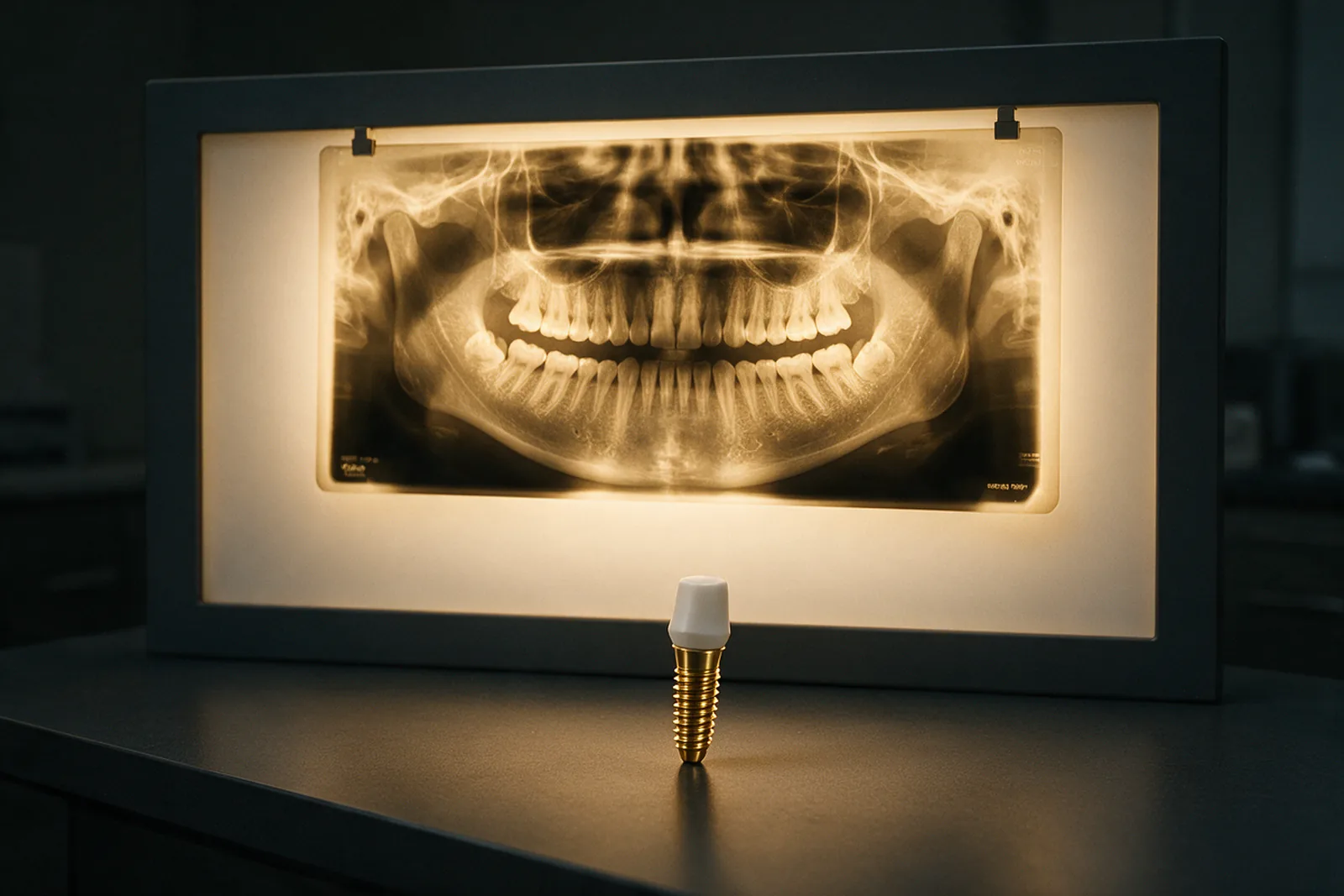
- Careful planning with a 3D scan (cone-beam CT), so the surgery goes exactly where the bone is.
- Following the after-care instructions to the letter.
- Taking medication on schedule the first day instead of waiting for pain.
Pain that is not normal
Call your dentist if you notice:
- Pain that gets worse after the third day instead of better.
- Fever, a bad taste or pus.
- Swelling that keeps growing.
- Bleeding that won't stop with firm pressure on gauze.
- Numbness in the lip or chin that lasts after the anesthesia should have worn off.
These don't automatically mean something is wrong, but they deserve a prompt look. Our dental emergency page explains how to reach us.

Does an implant hurt more than an extraction or a root canal?
Many patients say a single implant felt similar to, or easier than, having a tooth pulled. A root canal is a different treatment altogether: it saves a tooth instead of replacing it. If your tooth can still be saved, that's often worth exploring first; read about the signs you may need a root canal.
Questions to ask at your consultation
- Which kind of anesthesia or sedation do you recommend for me?
- Will I need a bone graft at the same time? Will that change recovery?
- Which medication should I take, and when should I start it?
- Who do I call if something feels wrong after hours?
The bottom line
A dental implant is designed to be a pain-free procedure, thanks to local anesthesia and, when needed, sedation. The days after usually bring manageable soreness that fades within the first week. Planning with a 3D scan, honest conversation about your anxiety and good after-care make the biggest difference. Learn more on our dental implants in Miami page.
Art Dental Studio offers consultations with a written estimate at three South Florida locations — Miami, Cooper City and Kendall — with bilingual care in English and Spanish. Implants are planned with 3D cone-beam imaging, with sedation available, by our multi-specialty team under the direction of Dr. Vivian Menendez (DMD · ADA).
Frequently asked questions
Will I feel pain during the implant procedure?
You should not. The area is fully numbed with local anesthesia before your dentist starts, so you feel pressure and vibration rather than pain. If you feel anything sharp, raise your hand and more anesthetic can be given. Sedation is also available if you are anxious.
How long does pain last after a dental implant?
Soreness and swelling usually peak around the second or third day and then ease steadily over the first week. After a single implant, many people return to normal activities within a day or two. Grafts, several implants or full-arch surgery can mean a longer period of tenderness.
When is pain after an implant not normal?
Call your dentist if pain gets worse after the third day, if you have fever, pus or a bad taste, swelling that keeps growing, bleeding that does not stop with firm pressure, or numbness that lasts after the anesthesia should have worn off.