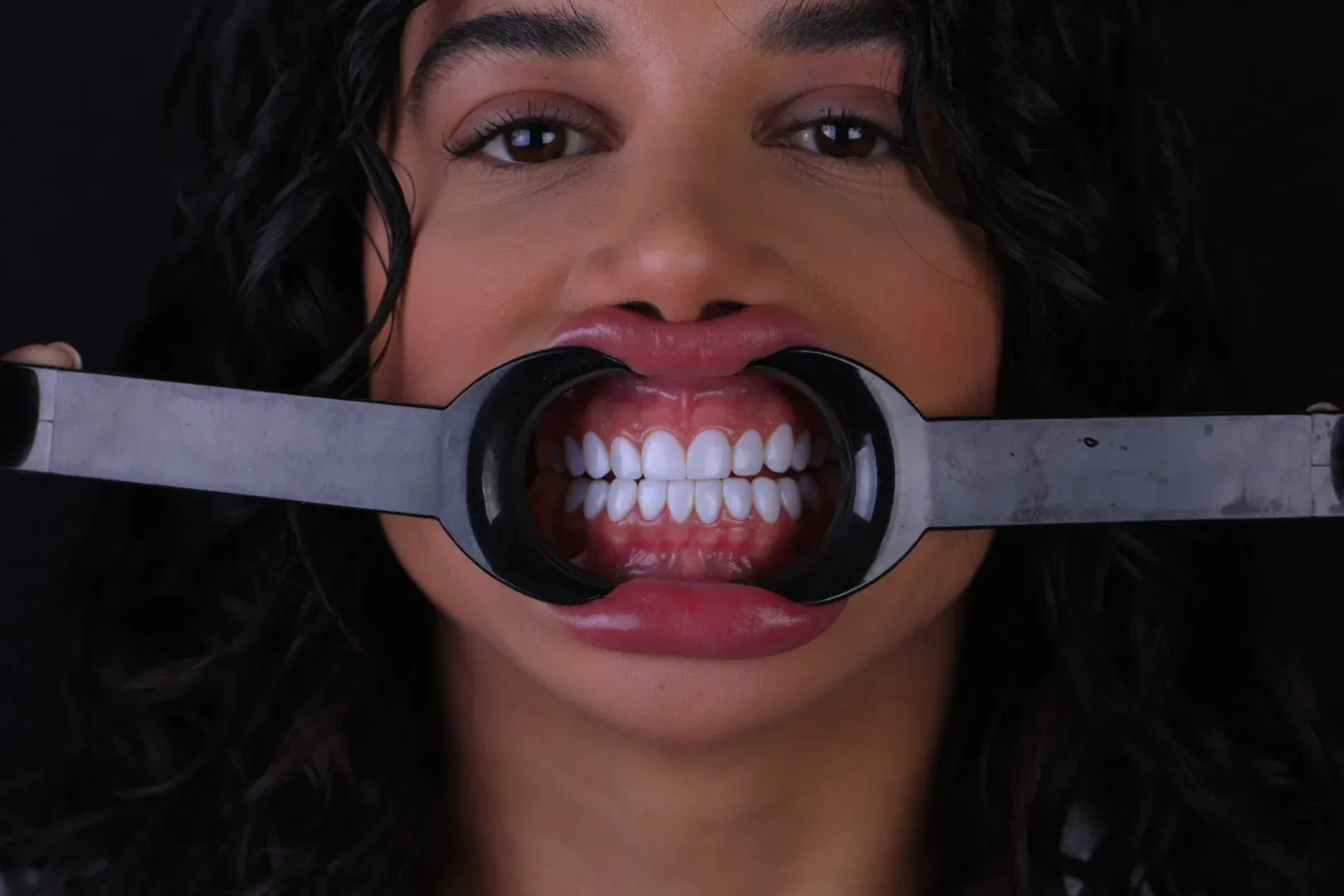
Caring for dental implants comes down to four habits: brush twice a day with a soft brush, clean under and around the implant daily with a water flosser or implant floss, avoid habits that damage teeth, and keep your professional cleanings. An implant can't get a cavity, but the gum around it can get sick.
Why implants still need daily care
An implant is a titanium post in the jawbone with a crown or bridge on top. The crown can't decay, so some people assume implants are "maintenance-free". They aren't. Plaque — the soft, sticky film of bacteria that forms on teeth every day — collects on implants just as it does on natural teeth.
If plaque stays, the gum around the implant becomes inflamed. Dentists call the early, reversible stage peri-implant mucositis. If it continues, it can become peri-implantitis, where the bone holding the implant starts to be lost. Daily cleaning is what keeps you in the first group — or out of both.
Your daily routine for single implants
- Brush twice a day with a soft-bristled brush, manual or electric. Angle the bristles toward the gumline, where the crown meets the gum, and use small gentle circles.
- Use a non-abrasive toothpaste. Very gritty "whitening" pastes can scratch the surface of crowns over time. Your dentist can recommend one.
- Clean between teeth once a day. Around a single implant, regular floss, implant floss or a small interdental brush with a coated wire all work. Ask which one fits the space you have.
- Rinse if your dentist recommends it. A mouthwash is a helper, never a substitute for brushing and cleaning between teeth.
Your daily routine for All-on-4 and full-arch bridges
A full-arch bridge is fixed — you don't take it out at home — so cleaning happens with the bridge in place. The key area is the space under the bridge, where it sits over the gum.
- Brush the bridge like teeth, twice a day, including the side that faces the tongue and the palate.
- Use a water flosser once a day. A water flosser (also called an oral irrigator) sends a thin stream of water to flush out food and plaque from under the bridge. Aim it along the gumline and under the bridge from both the cheek side and the tongue side.
- Pass implant floss under the bridge. Special floss with a stiff end (often called "super floss") can be threaded under the bridge and moved gently around each implant.
- Use an interdental or end-tuft brush for tight corners, especially behind the last tooth on each side.
Most patients get the hang of it within a few weeks. At your appointments, the team shows you exactly where to aim — and checks how it's going.
Your toolkit at a glance
| Tool | What it does | Best for |
|---|---|---|
| Soft toothbrush (manual or electric) | Removes plaque from visible surfaces | Everyone, twice a day |
| Water flosser (oral irrigator) | Flushes food and plaque from under bridges | All-on-4 and implant bridges |
| Implant floss / "super floss" | Threads under bridges and wraps around implants | Full-arch bridges, implant bridges |
| Interdental brush (coated wire) | Cleans the gaps between teeth and implants | Wider spaces, single implants |
| End-tuft brush | A small single-tuft brush for hard-to-reach spots | Behind the last teeth, tight corners |
Habits that protect your implants
- Don't smoke. Smoking makes gum problems around implants more likely and can hide their warning signs. Our guide on implants for smokers and people with diabetes explains why.
- Don't use your teeth as tools. No opening packages, cracking shells or biting ice.
- Protect against grinding. If you clench or grind at night, ask about a night guard. It protects the crowns or bridge from excess force.
- Manage your general health. Well-controlled diabetes and a healthy diet help your gums.
Warning signs: call your dentist if you notice
- Bleeding when you brush around an implant
- Gum that looks red, swollen or is pulling back
- A bad taste or pus near an implant
- A crown or bridge that feels loose, or a bite that suddenly feels different
- A chip or crack in the bridge
- Pain when chewing
Caught early, most problems around implants are much easier to treat.
Professional cleanings and check-ups
At home you remove most of the plaque; at the office the team removes what you can't reach and checks things you can't see. A typical rhythm is a cleaning and check-up every six months, though your dentist may recommend more frequent visits — for example if you have a history of gum disease, smoke, or have diabetes. During these visits the team checks the gum, the bite and the screws, and from time to time may take an X-ray to look at the bone around the implants. For full-arch bridges, the dentist may occasionally remove the bridge to clean underneath thoroughly.
Gum health around implants is part of what our periodontics team looks after — see gum disease treatment.
Questions to ask at your next visit
- Can you show me where I'm missing plaque?
- Which floss or brush fits the spaces under my bridge?
- How often should I come for cleanings in my case?
- Do I need a night guard?
The bottom line
Implants last longest in mouths that are cleaned well every day and checked regularly. A soft brush, a water flosser or implant floss, and your scheduled visits are the whole secret. If you're considering treatment, you can read more about dental implants and All-on-4 in Miami.
Art Dental Studio offers complimentary consultations with a written estimate at three South Florida locations — Miami, Cooper City and Kendall — with bilingual care in English and Spanish. Implant and full-arch patients are followed by our in-house multi-specialty team, including periodontics, and every final bridge is hand-crafted in-house by master ceramist Enrique, under the direction of Dr. Vivian Menendez (DMD · ADA · AACD · Invisalign Preferred Provider).
Frequently asked questions
How do I clean under my All-on-4 bridge?
Brush the bridge twice a day like teeth, then once a day use a water flosser along the gumline and under the bridge from both sides. Thread implant floss under the bridge around each implant, and use a small brush for tight corners. The team shows you where to aim.
Can dental implants get cavities?
The crown or bridge on an implant can't decay, but plaque still collects on it. If it isn't removed, the gum around the implant can become inflamed and, over time, the bone holding it can be lost. That's why daily cleaning and regular check-ups matter.
How often should I see the dentist after getting implants?
A typical rhythm is a professional cleaning and check-up every six months. Your dentist may recommend more frequent visits if you smoke, have diabetes or a history of gum disease. During these visits the team checks the gum, the bite and the screws.