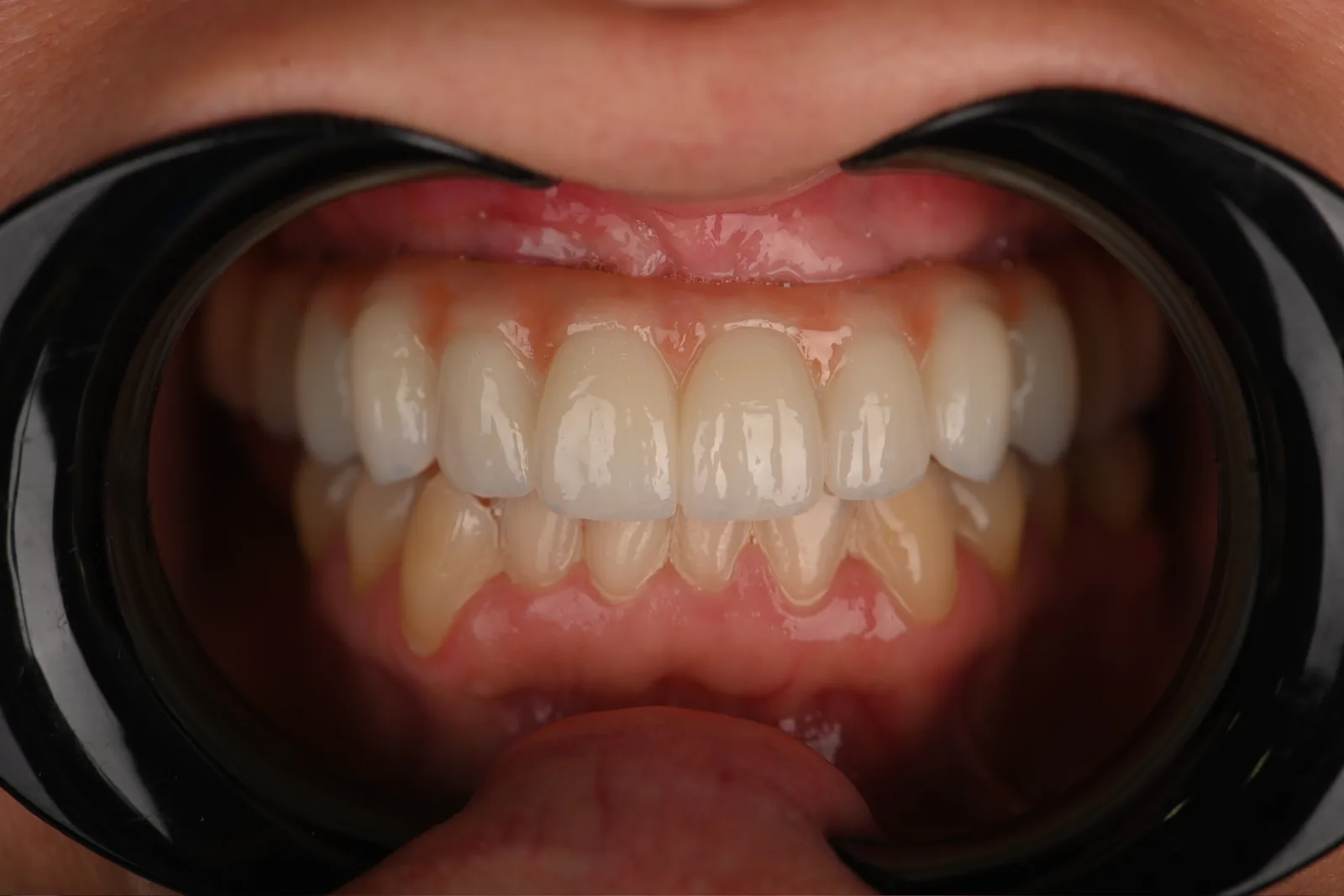
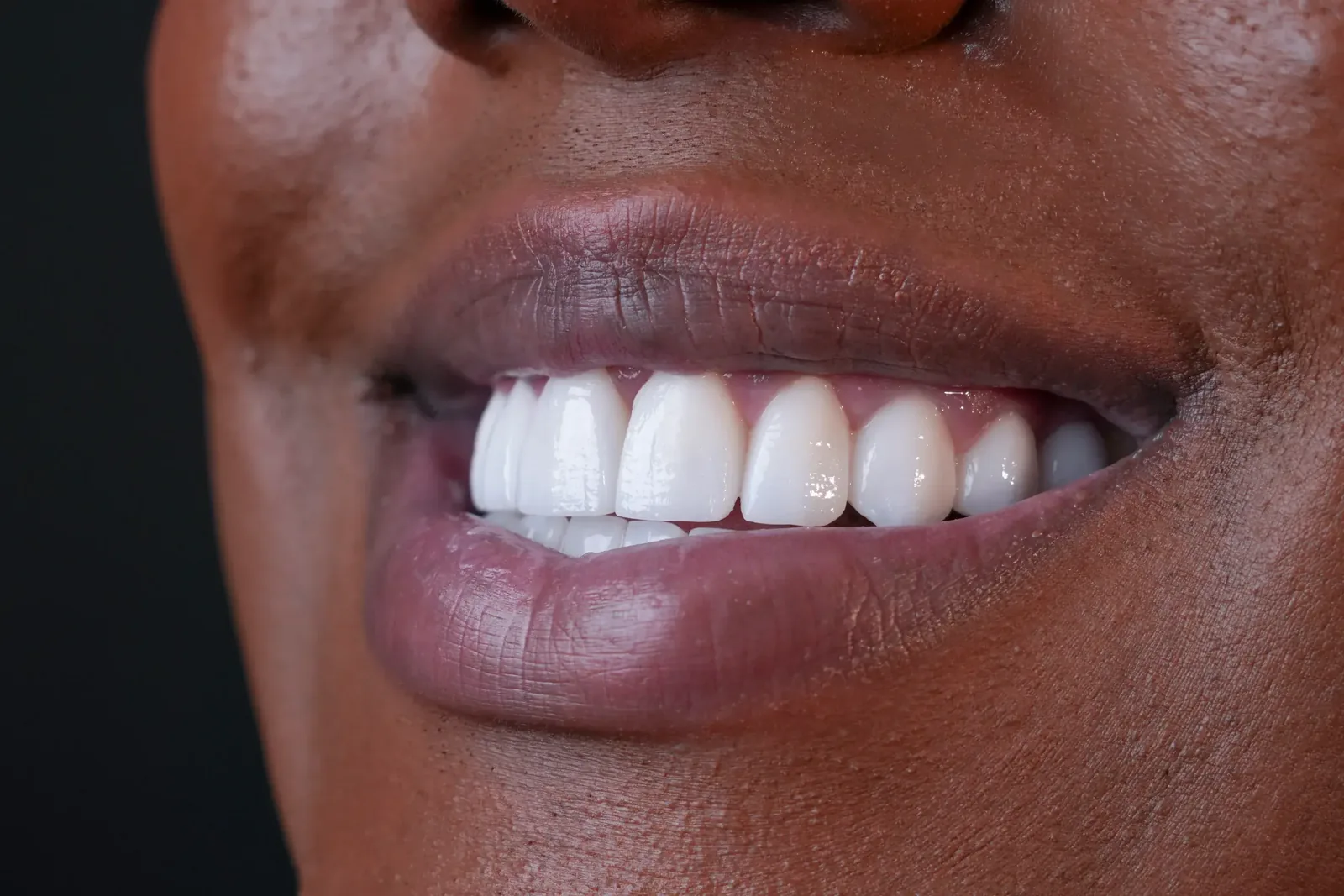
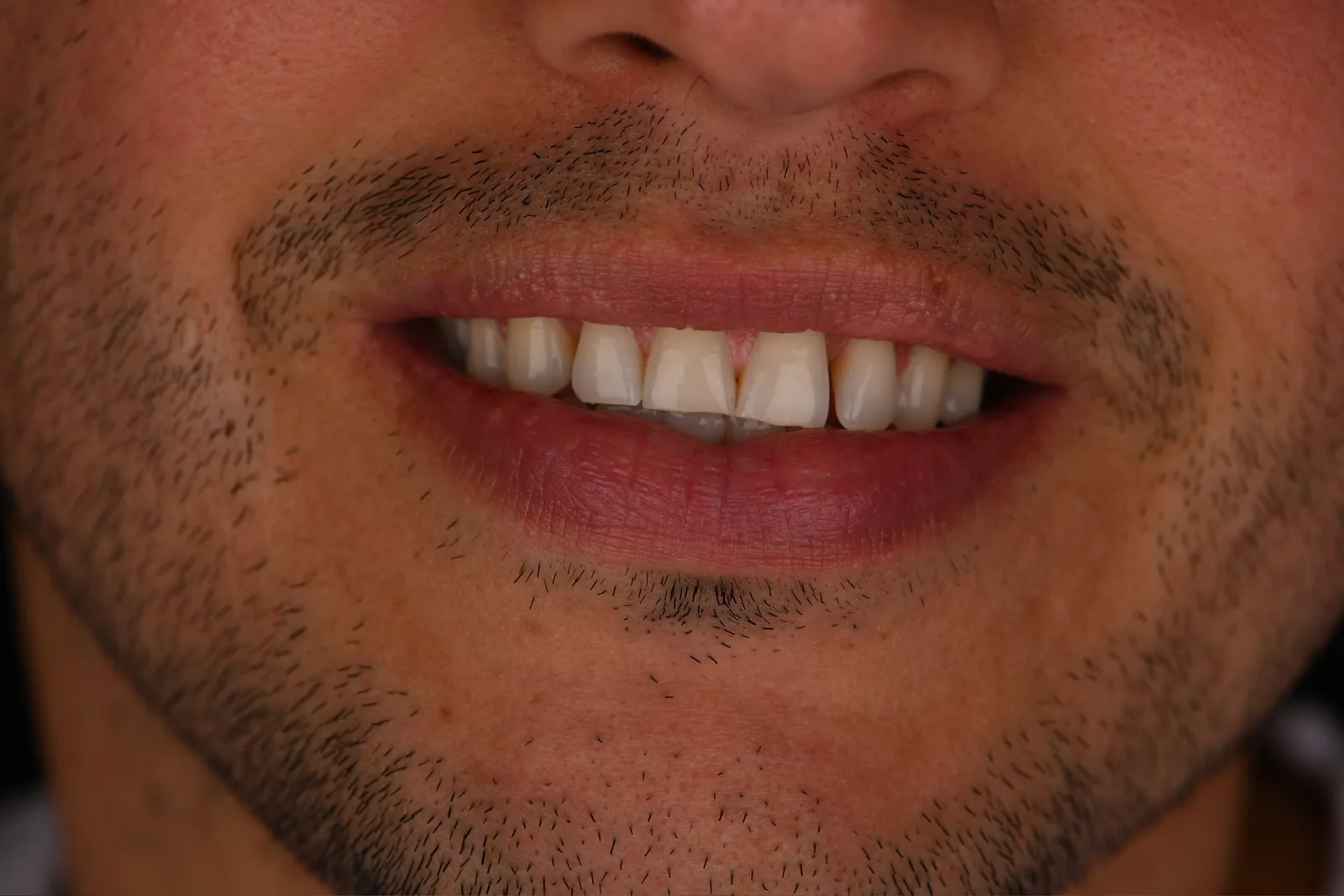
All-on-4 is a way to replace a whole upper or lower row of teeth with a fixed bridge held by four dental implants. Unlike a denture, the bridge doesn't come out at night: it's attached to the implants, and only your dentist removes it. When the implants are stable enough at placement, you usually leave the same day with a temporary fixed bridge, and your final teeth are placed after the implants heal.
All-on-4 in one minute
- What it replaces: a full arch — all the teeth on top, all the teeth on the bottom, or both.
- What holds it: four implants. Think of an implant as an artificial root, a small post placed in the jawbone.
- What you see: a single bridge of teeth, with gum-colored material where gum has been lost, screwed onto those implants.
- What it is not: a removable denture. You don't take it out to sleep or to clean it, and it doesn't rely on adhesive.
The name simply means "all the teeth on four implants." You may also hear All-on-6 or All-on-X. Those are the same idea with a different number of implants, and our guide All-on-4, All-on-6 or All-on-X, explained covers that comparison in detail, and our All-on-4 treatment page explains how we do it at Art Dental Studio. Here we focus on the basics.
Who All-on-4 is for
All-on-4 is usually considered when most or all of the teeth in an arch are missing, failing, or can't be saved. Common situations include:
- You already wear a full denture and you're tired of it moving, rubbing or limiting what you eat.
- Many of your teeth are loose, broken or badly decayed, and repairing them one by one no longer makes sense.
- You've been told you need several implants and want a fixed option for the whole row.
Whether it's right for you depends on your bone, your general health, your bite and your expectations. Your dentist evaluates all of that before recommending anything. If you want the full picture, read who is a good candidate for All-on-4.
How the process works, in broad strokes
Every case is planned individually, but most follow the same general path:
- Consultation and records. Your dentist examines your mouth, takes photos and impressions, and usually asks for a 3D scan to see how much bone you have and where.
- The plan. Implant positions and the shape of your new teeth are planned before the surgery day, so the temporary bridge can be prepared in advance.
- Surgery day. Teeth that can't be saved are removed, the four implants are placed, and — when they are stable enough — a temporary fixed bridge is attached. It's done with local anesthesia, and most people describe mild discomfort afterward. If dental visits make you anxious, ask us about options.
- Healing. Over the following months, the implants bond with the bone. You eat softer foods during this stage.
- Final teeth. Once your dentist confirms the healing, your final bridge is designed and placed.
The timing depends on your case. Your dentist will explain your own timeline after the evaluation.
Temporary bridge vs. final bridge
This is the part that confuses many patients, so here it is plainly.
The temporary bridge is the one you get on surgery day, when the implants are firm enough. It lets you leave with fixed teeth instead of going home without teeth or with a removable denture. It looks like teeth, but it's a working version: it's made to protect the implants while they heal, so you treat it gently and stick to softer foods.
The final bridge comes later, after the implants have bonded with the bone. It's made with more time and detail — shape, color, size and how your lips rest on it — and it's the set you keep long term. At Art Dental Studio, final teeth are made in the clinic's own laboratory by master ceramist Enrique, working alongside the doctor, so adjustments can be made in person rather than through an outside lab.
If the implants aren't firm enough on surgery day, your dentist may choose a different sequence to protect them. That isn't a failure — it's the safer route for that case.

How All-on-4 differs from a denture
| All-on-4 | Traditional denture | |
|---|---|---|
| How it stays in place | Screwed onto implants | Rests on the gums, sometimes with adhesive |
| Do you remove it? | No, only your dentist does | Yes, daily |
| Palate (upper arch) | Usually left uncovered | Usually covered |
| Chewing | Feels closer to natural teeth for many people | Can be limited with harder foods |
| Bone | Implants can help keep stimulating the jawbone | Does not stimulate the bone underneath |
| Process | Surgery plus a healing period | No surgery |
A denture is still a valid option for some people, for example when surgery isn't advisable. For a deeper comparison, read All-on-4 vs. traditional dentures.
Caring for your All-on-4
All-on-4 teeth don't get cavities the way natural teeth do, but the gums and implants underneath still need care. In general:
- Clean every day. Brush the bridge and clean underneath it where it meets the gum. A water flosser and small brushes are commonly recommended; your dental team shows you which tools fit your bridge.
- Go to your check-ups. Regular professional cleanings and reviews help catch small issues early. From time to time your dentist may remove the bridge to clean and check it.
- Respect the healing stage. In the first months, stick to the soft-food guidance. Our article All-on-4 recovery: what to eat has practical ideas.
- Tell us if you grind your teeth. Clenching and grinding put extra force on the bridge. A night guard may be recommended.
- Avoid smoking. It can slow healing and affect the gums around the implants.
A real case from Art Dental Studio

All-on-4 upper arch · Miami. A finished result from one of our patients, published with the patient's permission. Every case is different, and results vary depending on each person's anatomy and treatment plan. You can see more finished results in our smile gallery.
We'll soon be adding videos of our team explaining All-on-4.

Questions to bring to your consultation
- Am I a candidate for All-on-4, or would another option suit me better?
- Will I leave with fixed teeth on surgery day if my implants are stable enough?
- How long will I wear the temporary bridge in my case?
- Who makes the final bridge, and can I give input on shape and color?
- How do I clean it, and how often are check-ups?
For a broader checklist, see how to choose a dental implant dentist in Miami.
What about cost?
The cost depends on your case: one arch or two, your bone, whether extractions or grafts are needed, and the material of the final bridge. We explain those factors in what determines the cost of All-on-4, and you receive a written estimate after your consultation. If you'd like to spread the investment out, ask about our financing options.
The bottom line
All-on-4 replaces a full row of teeth with a fixed bridge on four implants. You typically get temporary fixed teeth on surgery day when the implants are firm enough, and your final teeth after healing. Whether it's the right choice for you is something only an in-person evaluation can tell. Learn more on our All-on-4 treatment page, or book a consultation at one of our three locations — Miami / Hialeah, Kendall or Cooper City.
Art Dental Studio has three South Florida locations — Miami / Hialeah, Kendall and Cooper City — with care in English and Spanish. The clinic is directed by Dr. Vivian Menendez, and final teeth are made in the clinic's own laboratory by master ceramist Enrique, working alongside the doctor.
Frequently asked questions
What is All-on-4?
A way to replace a whole upper or lower row of teeth with a fixed bridge held by four dental implants. Only your dentist removes it.
Will I leave with teeth the same day?
When the implants are stable enough at placement, you usually leave with a temporary fixed bridge. Your final bridge is placed after the implants heal.
Is All-on-4 the same as a denture?
No. A denture rests on the gums and comes out daily; an All-on-4 bridge is screwed onto implants. Your dentist evaluates which option fits your case.