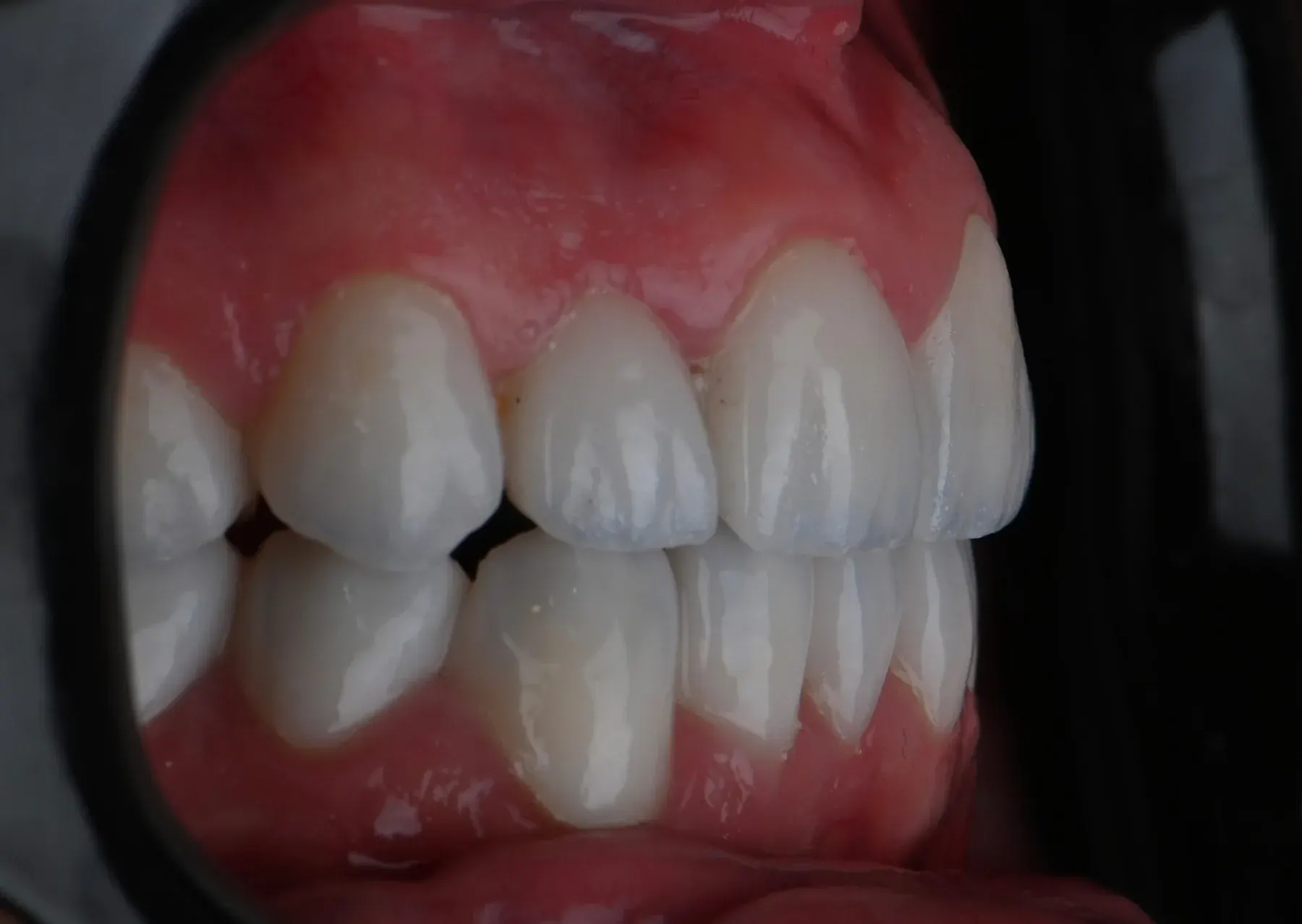
All-on-4 recovery usually goes in stages: soreness and swelling peak in the first days, liquids and very soft food fill roughly the first week or two, soft meals follow while the implants fuse with the bone over a few months, and normal chewing returns with the final bridge. Your timeline depends on your case.
Before we start: why the diet matters
On surgery day you leave with a temporary fixed bridge, so you have teeth from the start. But the implants underneath are still settling into the bone — a process called osseointegration that usually takes a few months. Hard or very chewy food puts strong forces on implants that haven't fused yet. A soft diet isn't about comfort only; it protects the result.
The timeline below is a general guide using typical ranges. Your dentist gives you instructions for your specific case, and those always come first.
Days 1–3: rest and cold
- What you'll feel: numbness wears off over the first hours. Soreness, swelling and some bruising are normal, and swelling often peaks around the second or third day.
- What helps: take the medication exactly as prescribed. Use cold packs on the cheeks in short intervals during the first day or two. Sleep with your head slightly raised.
- What to avoid: smoking, alcohol, spitting hard and drinking through a straw — suction can disturb the healing area. Avoid hot drinks while you're numb.
- If you had sedation: someone needs to drive you home and stay with you for the rest of the day.
What to eat: cool or lukewarm liquids and very smooth foods — broths, protein shakes, smoothies eaten with a spoon, yogurt, applesauce, puddings, blended soups that aren't hot.
Days 4–14: very soft foods
- What you'll feel: swelling usually goes down day by day. Some tenderness when you move the jaw is common.
- What helps: gentle rinses as instructed, and careful brushing of the temporary bridge with a soft brush, avoiding pressure on the gums at first.
- Follow-up: you'll usually have a check-up in this period so the team can see how the gums are healing and adjust the bite if needed.
What to eat: foods you can mash with a fork or your tongue — scrambled eggs, mashed potatoes, oatmeal, cream of wheat, soft polenta, hummus, refried beans, cottage cheese, flaky fish, well-cooked pasta, avocado, ripe banana.
Weeks 2–8 or so: soft, easy-chew foods
- What you'll feel: most patients are back to normal daily routines. The bridge starts to feel like part of you.
- What helps: keep up your cleaning routine, including a water flosser under the bridge once your dentist says it's time. Our guide on caring for dental implants explains how.
- The rule: cut food into small pieces and chew gently, spreading the bite across both sides. Avoid biting into things with your front teeth.
What to eat: soft meats like shredded chicken or ground beef, meatballs, rice and beans, soft tortillas, steamed vegetables, soft cheeses, pancakes, soft bread without a hard crust, ripe fruit.
Until healing is confirmed: still careful
Implants generally take a few months to integrate with the bone. During this whole period your dentist will probably ask you to keep avoiding hard, sticky and very chewy foods. Upper cases or softer bone may call for a little more patience.
Final bridge: back to a normal diet
Once your dentist confirms the implants have integrated, the final bridge is designed and made. From there, most people return to a varied diet, with a few common-sense limits for life — no chewing ice, opening bottles with your teeth or biting hard candy. If you're choosing the material for that bridge, see zirconia vs. acrylic All-on-4 bridges.
Foods to avoid during healing
| Avoid | Why | Easy swap |
|---|---|---|
| Nuts, seeds, popcorn | Hard and small; pieces lodge under the bridge | Smooth nut butter, hummus |
| Crusty bread, bagels, chips | Hard and abrasive | Soft bread, soft tortillas |
| Steak, jerky, tough meat | Requires strong chewing | Shredded or ground meat, fish |
| Raw carrots, whole apples | Hard to bite | Steamed vegetables, applesauce |
| Caramel, gum, sticky candy | Pulls on the bridge | Pudding, yogurt, soft fruit |
| Very hot or spicy food (early on) | Irritates healing gums | Lukewarm, mild meals |
| Alcohol and tobacco | Slow healing | Water, milk, smoothies |
When to call the office
Call right away if you have fever, bleeding that doesn't stop with gentle pressure, swelling that gets worse after the third or fourth day, pain that increases instead of improving, pus or a bad taste, or if the temporary bridge feels loose or cracks.
Questions to ask before surgery
- How long should I stay on liquids and very soft foods in my case?
- When can I start using a water flosser?
- When is my first follow-up?
- When will I be able to eat normally again?
- What should I do if the temporary bridge chips?
The bottom line
All-on-4 recovery is a gradual return to normal: a few days of rest and cold, a week or two of liquids and very soft food, then soft meals while the implants fuse with the bone, and a normal diet with your final bridge. Following the food rules protects the implants during the months that matter most. To learn more, see All-on-4 in Miami and our All-on-4 vs. dentures comparison.
Art Dental Studio offers complimentary consultations with a written estimate at three South Florida locations — Miami, Cooper City and Kendall — with bilingual care in English and Spanish. Full-arch cases are planned with 3D imaging and treated with sedation available by our in-house multi-specialty team, and every final bridge is hand-crafted in-house by master ceramist Enrique, under the direction of Dr. Vivian Menendez (DMD · ADA · AACD · Invisalign Preferred Provider).
Frequently asked questions
How long does All-on-4 recovery take?
Soreness and swelling usually peak in the first few days. Liquids and very soft food fill roughly the first week or two, then soft meals while the implants fuse with the bone over a few months. Your dentist gives you the exact timeline for your case.
What can I eat after All-on-4 surgery?
At first, cool or lukewarm liquids and smooth foods like broths, shakes, yogurt and blended soups. Next, foods you can mash with a fork, such as scrambled eggs, mashed potatoes and flaky fish. Later, soft meats, rice and beans and steamed vegetables cut small.
Why do I need a soft diet if I already have teeth?
The temporary bridge gives you teeth from day one, but the implants underneath are still fusing with the bone. Hard or very chewy food puts strong forces on implants that haven't integrated yet. Following the soft diet protects the result during those months.