Neither option is better for every adult. Invisalign uses clear, removable aligners that are hard to see but only work if you wear them most of the day. Braces stay fixed on the teeth, so they keep working without your daily effort, and they handle a wider range of bite problems. An orthodontic exam shows which one fits your teeth.
How do Invisalign and braces move teeth?
Both apply gentle, steady pressure that moves teeth a little at a time. What changes is the tool.
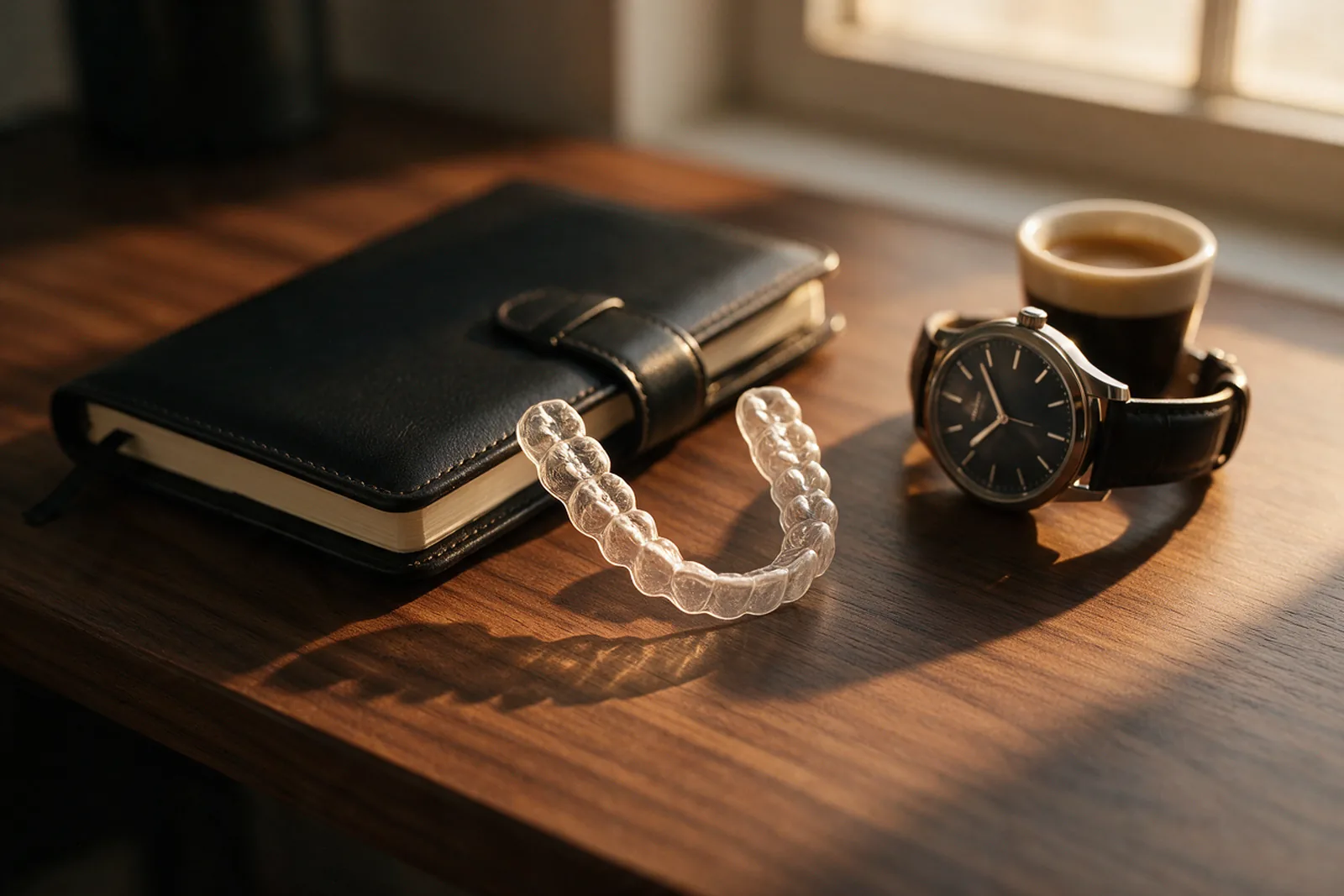
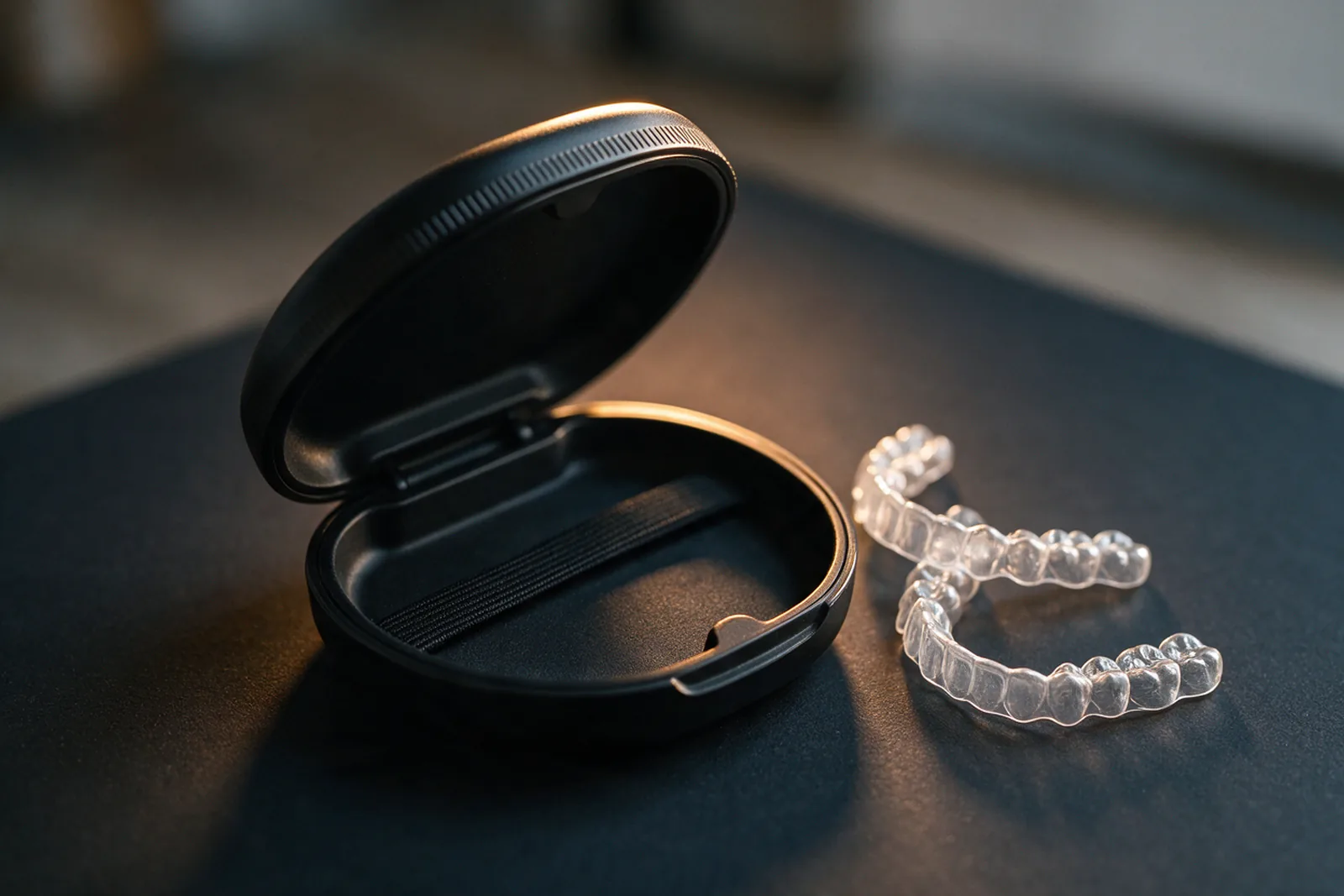
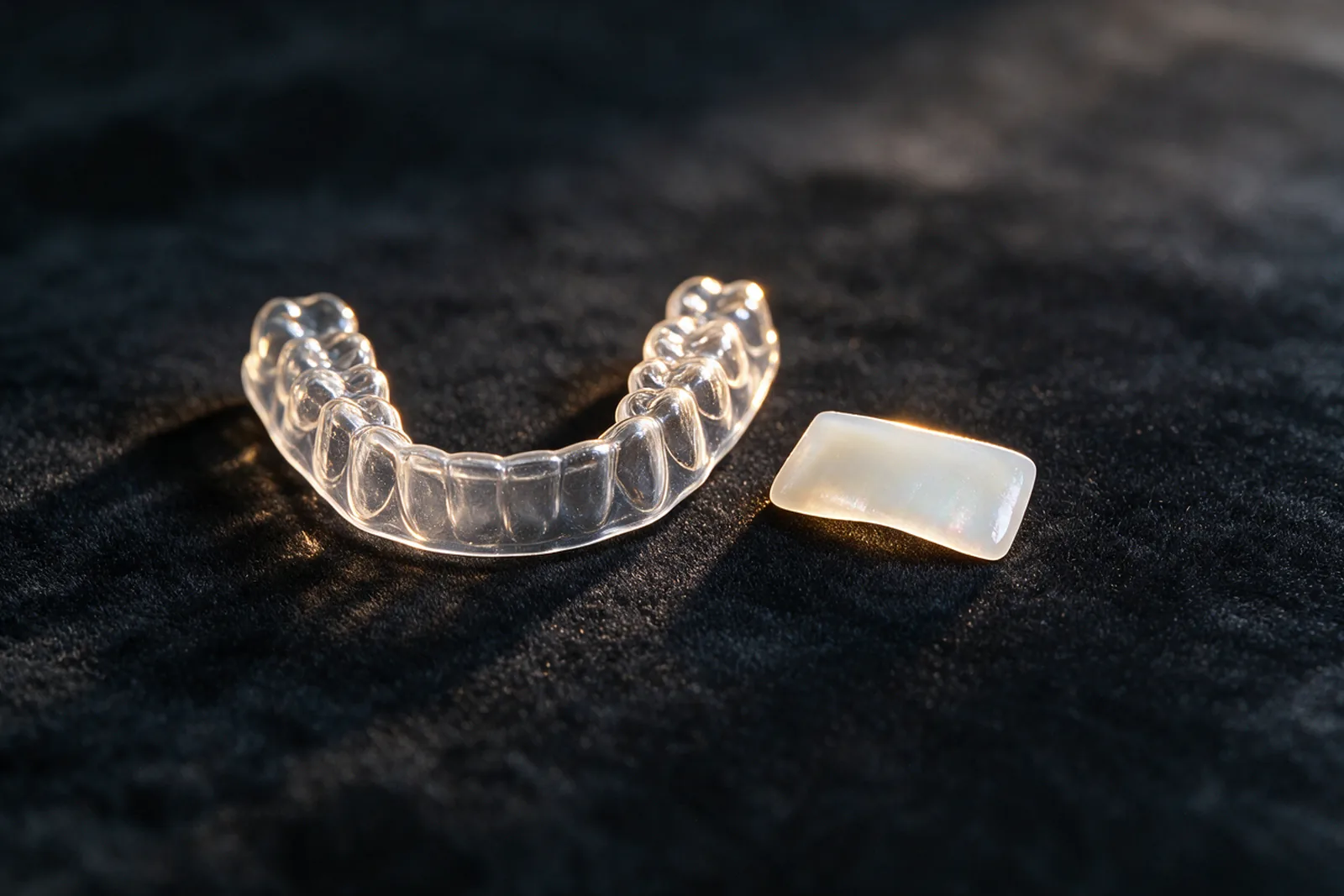
Invisalign is a brand of clear aligners: thin plastic trays made to fit your teeth, each one shaped slightly differently from the last. You switch to the next tray on the schedule your orthodontist gives you. Small tooth-colored bumps called attachments are often bonded to some teeth so the trays can grip and push in the right direction. The American Association of Orthodontists says aligners are usually worn at least 22 hours a day and must come out when you eat or drink and when you brush and floss.
Braces are brackets bonded to the front of the teeth with a wire running through them. The orthodontist adjusts the wire at regular visits. Metal is the classic choice, but there are also ceramic braces with tooth-colored or clear brackets, and lingual braces placed on the back of the teeth, where nobody sees them.
Invisalign vs. braces side by side
| Invisalign (clear aligners) | Braces | |
|---|---|---|
| How it looks | Clear trays, hard to notice in conversation | Visible brackets, unless ceramic or lingual |
| Removable | Yes, to eat, drink and clean | No, fixed until treatment ends |
| Who does the work | You, by wearing the trays most of the day | The appliance works around the clock on its own |
| Eating | No food limits, but trays come out every time | Avoid hard and sticky foods; cut food into smaller pieces |
| Cleaning | Brush and floss as usual, plus clean the trays | More effort around brackets and wire |
| Office visits | Check-ups to review progress and get new trays | Regular adjustments of the wire |
| Range of cases | Many crowding and spacing problems | Mild to complex bite problems |
When Invisalign tends to suit an adult
Many adults choose aligners because of work. People who speak in front of others all day, in a courtroom, a classroom or with clients, often prefer that the treatment not show. Being able to take the trays out for a dinner or a photo also matters.
Aligners tend to fit well when:
- The crowding, gaps or bite problem are mild to moderate
- You are disciplined enough to wear the trays nearly all day, every day
- You don't mind brushing after meals before putting the trays back in
- You want to keep eating everything you eat now
The AAO is direct about the limit: clear aligners are not right for everyone. If the trays spend hours in a case or a pocket, the teeth simply stop moving as planned. We go deeper into this choice in Invisalign for adults.

When braces may be the better call
Braces make sense for adults too, and not only for complicated cases. They are often the stronger option when:
- The bite problem is complex, for example some large rotations or teeth that need to move up or down
- You know you would forget the trays or take them out too often
- You would rather not think about the treatment day to day
- Your orthodontist sees movements that are more predictable with brackets and wire
Ceramic and lingual braces are worth asking about if appearance is your main worry and aligners are not a good fit.
What daily life looks like with each
With aligners, expect some pressure for a day or two each time you start a new tray. Some people notice a slight change in their speech at first. The routine is simple but strict: trays out to eat, brush, trays back in. Sweet coffee, juice or snacks with the trays on trap sugar against the teeth, so most orthodontists ask you to drink only plain water while you wear them.
With braces, the teeth usually feel sore for a few days after each adjustment, and the brackets can rub the cheeks until the mouth gets used to them. Hard and sticky foods can break a bracket. Cleaning takes longer; a soft brush, a water flosser or small brushes that fit between the wires help.
Either way, once the teeth are in place you will need a retainer to keep them there. Your orthodontist explains how and when to wear it.
Check your gums before you start
Moving teeth puts force on the gums and the bone around them, so they need to be healthy first. If your gums bleed or have pulled back, your dentist will want to treat that before orthodontics begins. Our guide on gingivitis vs. periodontitis explains the difference. Cavities and broken fillings are usually taken care of first as well.
At Art Dental Studio, the orthodontist works in the same clinic as the general dentists and the periodontist, so the gum check, the dental work and the orthodontic plan are coordinated by one team. You can read how that works on our multi-specialty dentist page, and see more about Invisalign at Art Dental Studio. If you are still weighing whether to straighten your teeth at all, see crooked teeth: options for adults.

Questions to ask at your visit
- Is my case a good fit for aligners, braces, or both?
- What would aligners not be able to do in my mouth?
- Do my gums or any teeth need treatment before we start?
- How often will I need to come in during treatment?
- What kind of retainer will I need afterward?
Where to be seen in South Florida
If you are an adult thinking about straightening your teeth, Art Dental Studio has three locations, with care in English and Spanish:
Miami / Hialeah (305) 922-2262 · Kendall (305) 395-3330 · Cooper City (954) 233-0707
The bottom line
For an adult, the choice between Invisalign and braces comes down to two things: what your teeth need and how you live. Aligners are discreet and removable but depend on your discipline. Braces work on their own and cover more complex cases. Ask for an orthodontic exam, and let the orthodontist tell you what each option can and cannot do in your mouth.
Art Dental Studio has three South Florida locations — Miami / Hialeah, Kendall and Cooper City — with care in English and Spanish. General dentistry, orthodontics, endodontics and periodontics work under one roof, in a clinic directed by Dr. Vivian Menendez.
Frequently asked questions
Is Invisalign or braces better for adults?
Neither is better for every adult. Invisalign is discreet and removable but only works if you wear the aligners most of the day, while braces stay fixed and handle a wider range of bite problems. An orthodontic exam shows which one fits your teeth.
How many hours a day do you wear clear aligners?
The American Association of Orthodontists says aligners are usually worn at least 22 hours a day. They come out to eat or drink and to brush and floss, then go right back in. Your orthodontist gives you the exact schedule for your trays.
Do my gums need to be healthy before orthodontic treatment?
Yes. Moving teeth puts force on the gums and bone around them, so gum disease is usually treated before orthodontics begins. Cavities and broken fillings are often taken care of first as well.