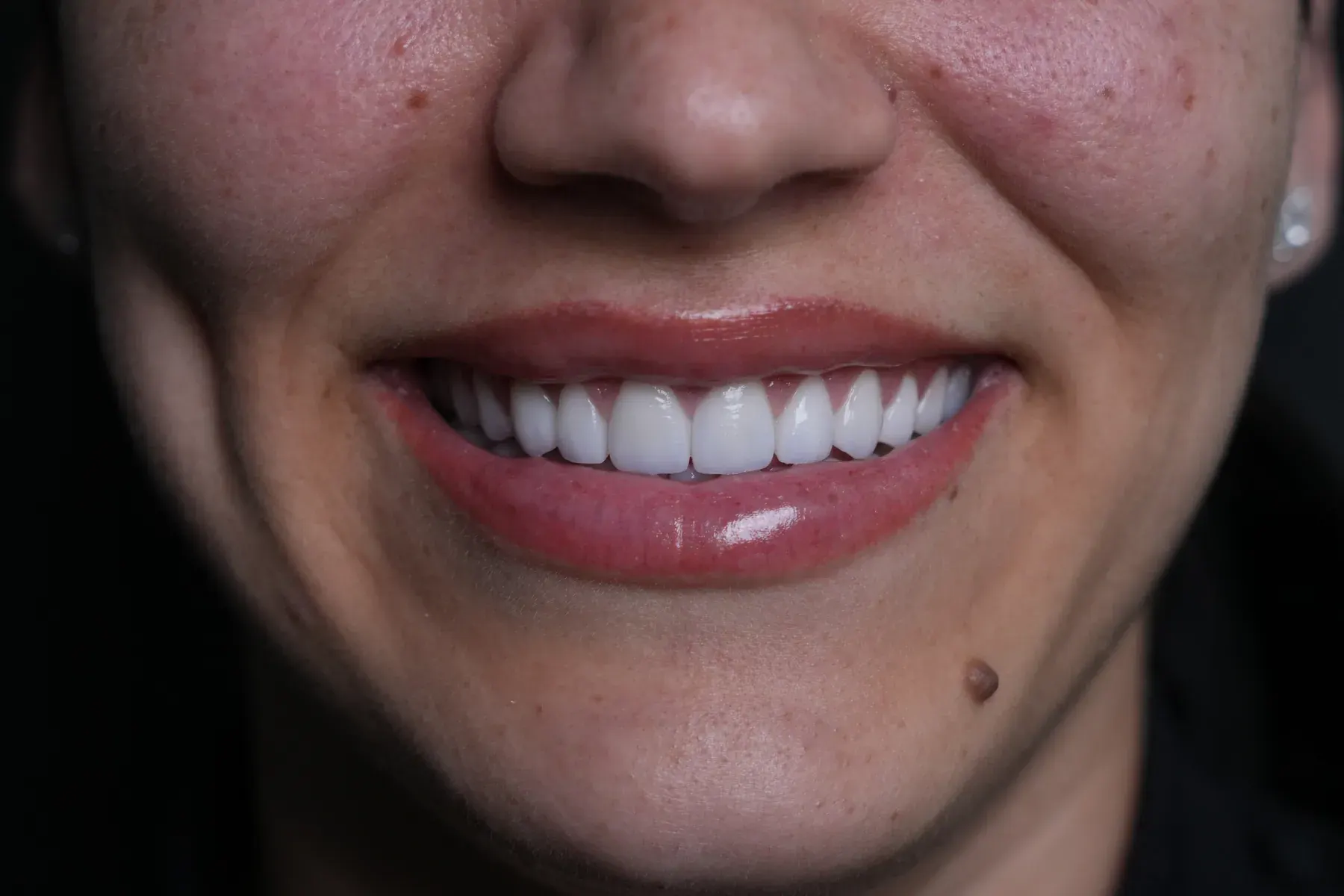
A filling repairs a tooth when the damage is small and enough healthy structure remains to support it. A crown is needed when the tooth is too broken, cracked, worn or weakened to hold a filling — most often after a large cavity or a root canal. In short, the amount of tooth left is what decides.
The core difference: how much tooth is left
Think of it as patch versus cap. A filling fills a small hole and relies on the surrounding tooth to stay strong. A crown covers the entire visible tooth, wrapping and reinforcing it like a helmet. When too little healthy tooth remains, a filling has nothing solid to hold onto — that is the line where a crown takes over.
When a filling is enough
A filling is usually the right call when:
- The cavity or chip is small to moderate and caught early.
- Most of the natural tooth is still healthy and strong.
- The damage sits on a surface that doesn't take heavy chewing force.
- There are no cracks running through the tooth.
Modern tooth-colored fillings bond directly to the tooth, restore its shape, and blend in. For everyday decay caught at a routine cleaning, a filling is often all you need.
When your tooth needs a crown
A dental crown becomes the better option when the tooth needs to be rebuilt and protected, not just patched. The most common reasons:
- A large cavity — so much tooth is lost that a filling would be bulky and likely to fail.
- A cracked or fractured tooth — a crown holds the pieces together and stops the crack from spreading.
- After a root canal — a tooth treated with a root canal becomes more brittle, so a crown is usually placed to keep it from splitting.
- Significant wear — from grinding or an aging restoration, where the tooth needs full coverage to rebuild height and function.
Crown vs. veneer: functional vs. cosmetic
People often confuse the two. The simplest way to tell them apart: a crown is functional, a veneer is cosmetic. A crown covers the whole tooth to restore strength when it's damaged. A porcelain veneer is a thin shell bonded to the front of a healthy tooth purely to improve its appearance. Damaged tooth that needs protection → crown. Healthy tooth you want to look better → veneer.
What crowns are made of
Today's crowns are most often all-porcelain or ceramic, prized because they reflect light like natural enamel and can be matched precisely to your other teeth. Other materials exist for specific cases where extra strength is the priority. The right choice depends on which tooth it's for, how much chewing force it handles, and how visible it is when you smile — something your dentist decides with you.
Questions to ask at your consultation
- How much healthy tooth structure do I have left?
- Is there a crack, and if so, will a filling hold or make it worse?
- If I had a root canal, does this tooth need a crown to protect it?
- Which material do you recommend for this specific tooth, and why?
- What happens long-term if we choose a filling now instead of a crown?
The bottom line
A filling restores; a crown rebuilds and protects. The deciding factor is how much strong, healthy tooth remains — small damage usually means a filling, while a large cavity, a crack, a root-canal-treated tooth or heavy wear usually means a crown. The only way to know for certain is an exam and an X-ray, so an honest diagnosis always comes first.
Art Dental Studio offers complimentary consultations at three South Florida locations — Miami, Cooper City and Kendall — with bilingual care in English and Spanish. Every specialty, from endodontics to periodontics, works under one roof, led by Dr. Vivian Menendez (DMD · ADA · AACD · Invisalign Preferred Provider).
Frequently asked questions
Do I need a crown or a filling?
You need a filling when the damage is small and enough healthy tooth remains to support it. You need a crown when the tooth is too broken, cracked, worn or weakened to hold a filling — most often after a large cavity or a root canal. Only an exam and X-ray can confirm which is right.
Why do you need a crown after a root canal?
A root-canal-treated tooth loses its inner nerve and blood supply and becomes more brittle, so it can crack under normal chewing force. A crown caps and reinforces the entire tooth to protect it from splitting long-term.
What is the difference between a crown and a veneer?
A crown is functional — it covers the whole tooth to restore strength when the tooth is damaged. A veneer is cosmetic — a thin shell bonded to the front of a healthy tooth purely to improve its appearance.