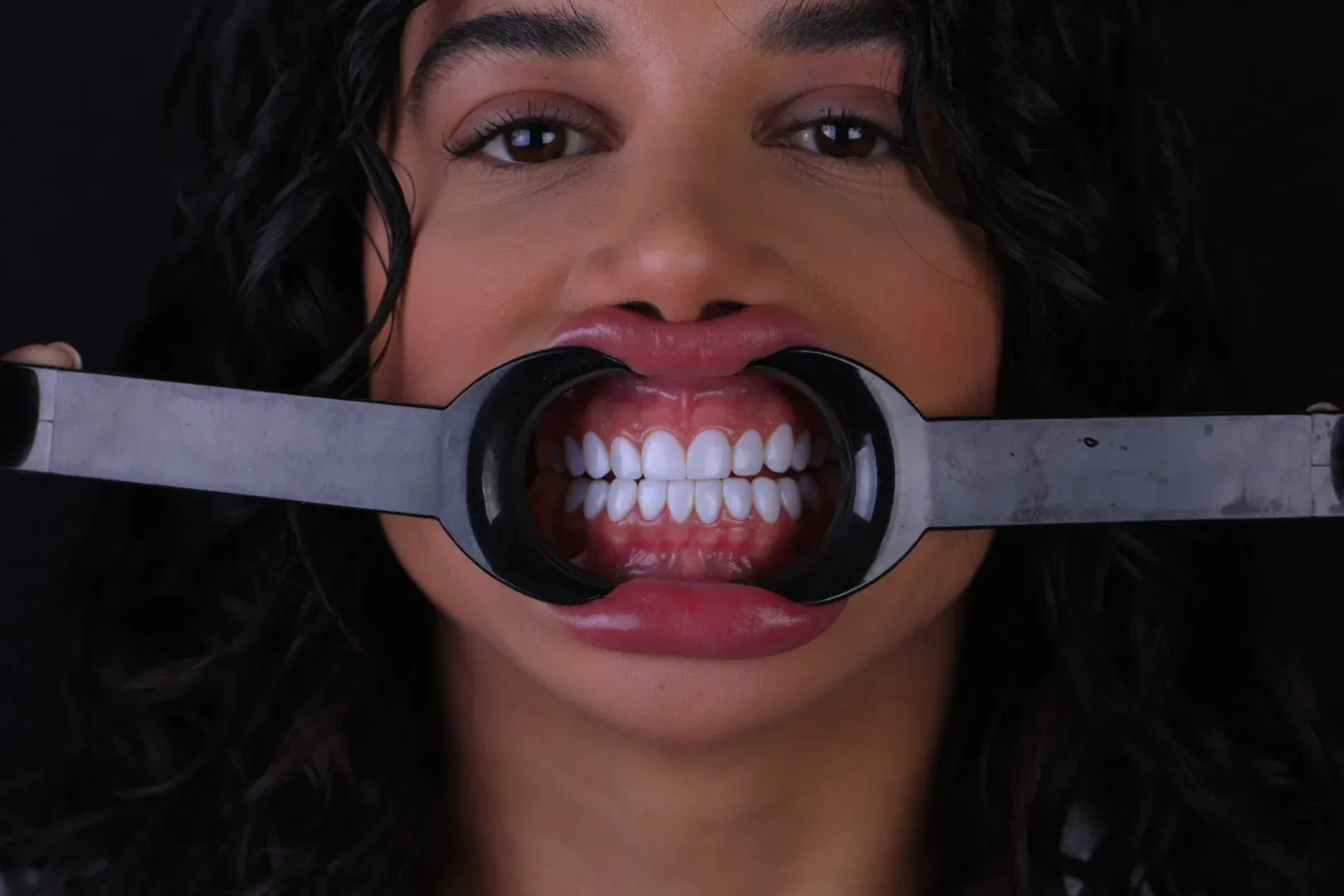
Bleeding gums almost always signal inflammation — most often gingivitis, the earliest and fully reversible stage of gum disease. Receding gums, where the tissue pulls back to expose more tooth or root, point to a deeper problem. Both are your body's early warning that plaque and bacteria are harming the foundation that holds your teeth in place.
Why gums bleed: gingivitis vs. periodontitis
Healthy gums don't bleed when you brush or floss. When they do, bacteria in the plaque along your gum line are irritating the tissue. Where that lands on the scale makes all the difference:
- Gingivitis — the early stage. Gums are red, puffy and bleed easily, but the bone and fibers holding your teeth are still intact. Gingivitis is fully reversible with a professional cleaning and better home care.
- Periodontitis — the advanced stage. Untreated inflammation spreads below the gum line, forming pockets and destroying the bone and ligament that anchor your teeth. That damage is permanent — you can't regrow lost bone — and it's why periodontitis is the leading cause of tooth loss in adults.
The encouraging part: caught at the bleeding stage, most cases never reach the point of no return.
What receding gums are telling you
Recession is when the gum margin pulls back and more of the tooth — or the softer root beneath it — becomes visible. Common signs include:
- Teeth that suddenly look longer than they used to
- A notch or step you can feel where enamel meets root
- New sensitivity to cold, sweet foods or brushing
- A tooth that looks darker near the gum line
Recession can come from periodontitis, but also from aggressive brushing, grinding, or a bite that overloads certain teeth. Because the causes differ, so does the fix — which is why recession is worth having evaluated rather than guessed at.
Why it matters beyond your mouth
Gum disease isn't only a dental problem. The chronic inflammation of untreated periodontitis has been linked by research to cardiovascular disease, diabetes (a two-way relationship), pregnancy complications and respiratory issues. Keeping your gums healthy is preventive medicine, not just cosmetics — and it protects the teeth you already have.
What to do right now
If your gums bleed or are receding, a few steps help before your visit:
- Don't stop brushing or flossing the area — gentle, consistent cleaning reduces the inflammation that causes bleeding.
- Switch to a soft-bristle brush at a 45-degree angle; hard scrubbing worsens recession.
- Floss daily — this is the single highest-impact habit for gum health.
- Book a professional cleaning. Only professional instruments remove the hardened tartar feeding the inflammation.
One exception needs same-day attention: a swollen, painful area, a gum "pimple," or a bad taste can signal an abscess and belongs in emergency dental care, not a routine visit.
When to see a periodontist — and why in-house matters
A general cleaning handles gingivitis. But deep pockets, loosening teeth, significant recession or bone loss are the territory of a periodontist — the gum specialist. Treatment can range from a deep cleaning (scaling and root planing) to gum grafting or regenerative procedures, all covered on our gum disease and periodontics page.
Here's what changes when the specialist is already on the team: at Art Dental Studio, the periodontist works in-house alongside every other specialty under one roof. If your cleaning reveals periodontal disease, you're treated in the same practice that already knows your case — no outside referral, no starting over with a stranger.
Questions to ask at your visit
- Is my bleeding gingivitis, or has it progressed to periodontitis?
- How deep are my gum pockets, and what's considered normal?
- What's causing my recession — disease, brushing, or my bite?
- Can this be treated here, or would I be referred elsewhere?
The bottom line
Bleeding and receding gums are signals, not verdicts. Caught early, gingivitis is fully reversible and recession can be managed before it makes you lose a tooth. Ignored, the same quiet process becomes the leading reason adults lose teeth. The move is simple: don't wait for pain — have the signal read while it's still an easy fix.
Art Dental Studio offers complimentary consultations at three South Florida locations — Miami, Cooper City and Kendall — with bilingual care in English and Spanish. Every specialty, from endodontics to periodontics, works under one roof, led by Dr. Vivian Menendez (DMD · ADA · AACD · Invisalign Preferred Provider).
Frequently asked questions
Why do my gums bleed when I brush?
Bleeding when you brush or floss usually means gingivitis — the earliest, fully reversible stage of gum disease, caused by plaque irritating the gum line. With a professional cleaning and consistent home care, healthy gums typically stop bleeding within a couple of weeks. Persistent bleeding should be evaluated to rule out periodontitis.
Are bleeding gums serious?
Not at first. Gingivitis is fully reversible with cleaning and good home care. But if ignored, the same inflammation can advance to periodontitis, which destroys the bone that anchors teeth and is the leading cause of tooth loss in adults. Bleeding gums are an early warning worth acting on, not a verdict.
Can receding gums grow back?
Gum tissue doesn't grow back on its own, but recession can be stopped and managed. Depending on the cause — periodontitis, aggressive brushing or bite issues — a periodontist may recommend a deep cleaning, a gentler brushing technique, or a gum graft to cover exposed roots.